
How To Plan A Course Outline
Updated by Xtensio
Creating a course outline is about organizing your ideas and goals into a plan that guides your students through their learning journey. In this article, we’ll show you how to design a clear and engaging course outline, step by step. Whether you’re an experienced educator or new to teaching, these practical tips will help you create an outline that inspires and informs. Let’s build a course that captivates your students and enhances your teaching experience. Follow along with the FREE Course Outline Template.
Listen to this article:
Xtensio is your team space for beautiful living documents.
Create, manage and share business collateral, easily.
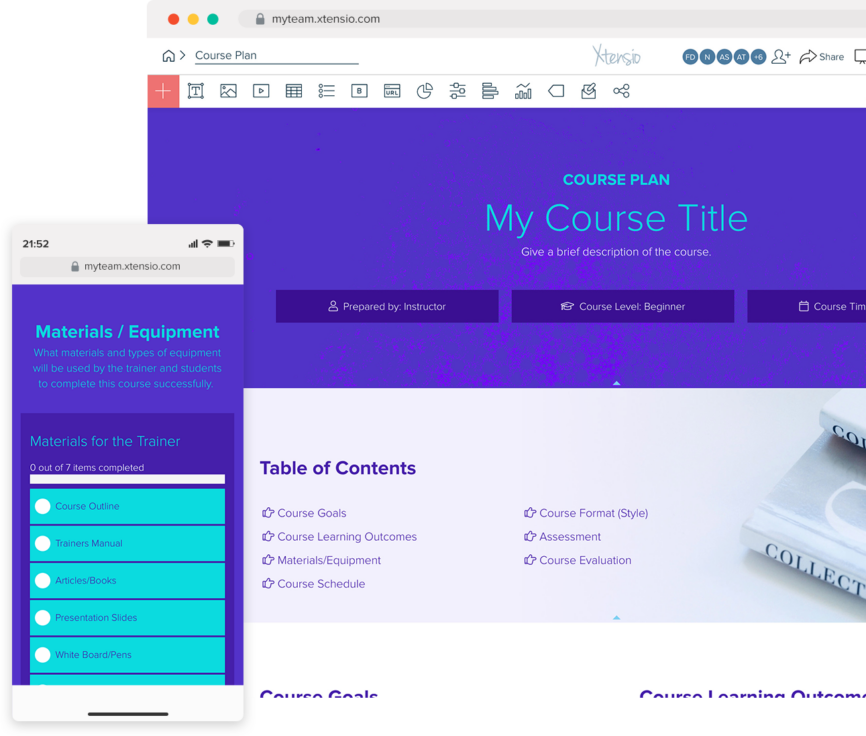
Table Of Contents
The purpose of a course outline
Imagine teaching a class without a clear plan. You might cover important topics, but without a logical flow, your students can quickly become confused and frustrated. A well-crafted course outline provides a roadmap, ensuring that each lesson builds on the previous one, creating a coherent and engaging learning experience.
This guide will help you design effective course outlines. You’ll find practical tips to make your outlines clear, organized, and inspiring. Let’s get started…
Steps to write a course outline
A course outline helps educators plan and communicate the core values and goals of their course. It includes course objectives, schedules, readings, assignments, quizzes, and teaching methods. A well-crafted lesson outline will help you:
- Set course goals, develop student learning objectives, and create assessment plans.
- Guide student expectations by outlining goals, materials, timelines, and learning outcomes.
- Provide a reference for colleagues, administrators, and accreditation agencies.
With Xtensio, you can easily create lesson plans tailored to your course objectives and learning outcomes. Collaborate with colleagues and department heads to develop an effective, ongoing course outline. Work together on a live document, leave feedback, demonstrate your course knowledge, and share a link to keep students updated on the lesson plan and objectives throughout the course.
Create your course plan header
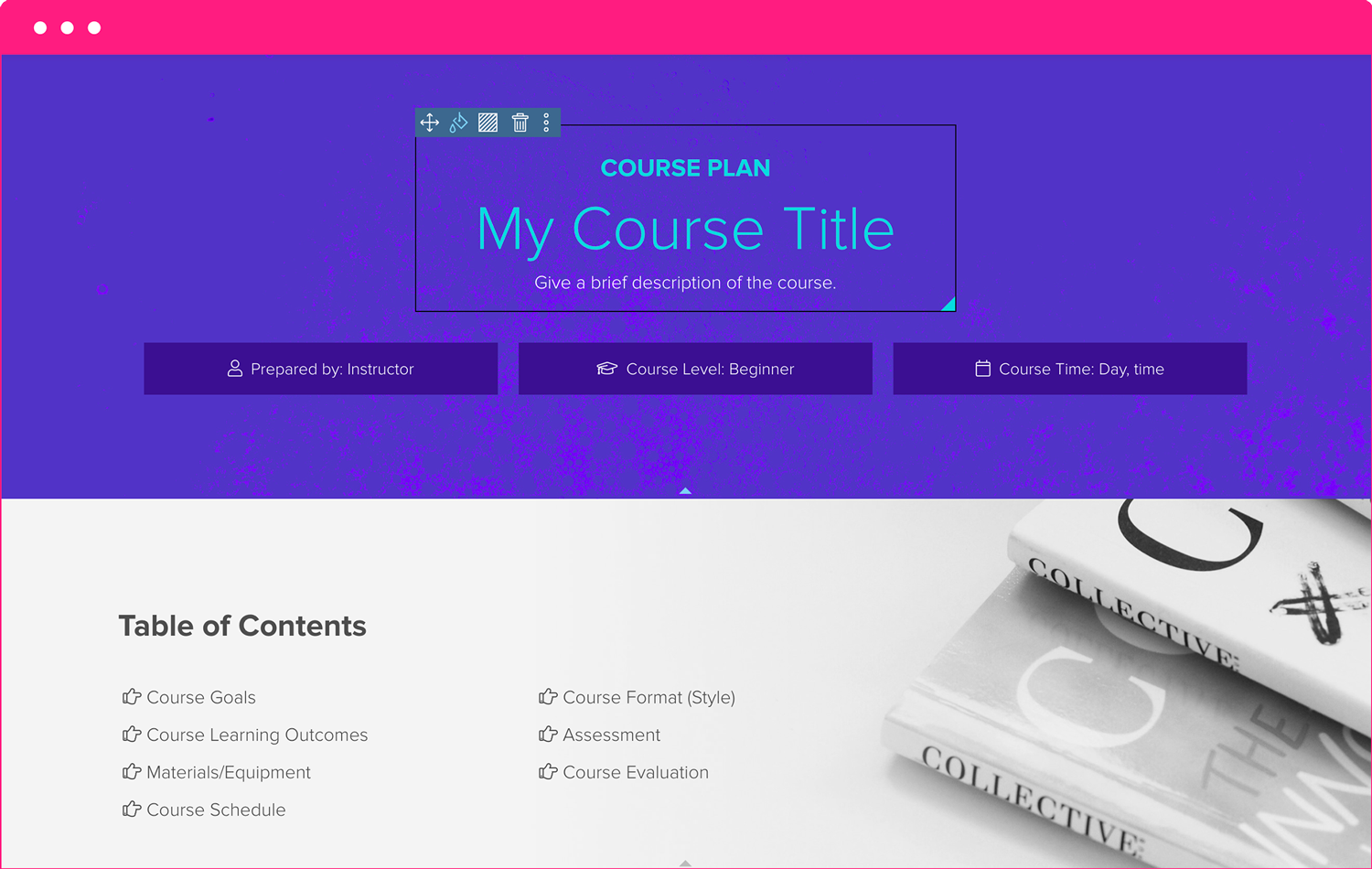
Start your lesson plan by including the course title and a brief description of the course. Make sure to add the instructor’s name, course level, date, time, and location.

QUICK TIP: Save a custom template to easily repurpose it for other lesson plans.
Outline your course
Successful courses require careful planning and continual revision. Take time to thoughtfully consider your course objectives before developing your weekly lesson plans.
Consult with Colleagues: If possible, speak with colleagues who have taught the same or similar courses to learn from their experiences, including their tactics, student expectations, and outcomes.
Team-Teaching: If you are team-teaching, start planning with your teaching partners well in advance. This proactive approach allows your team to thoroughly evaluate course objectives, align teaching philosophies, strategize content, determine effective teaching methodologies, and set clear course policies. Define distinct roles for each instructor to ensure a smooth and cohesive teaching experience.
Example Table of Contents:
- Course Goals
- Course Learning Outcomes
- Materials/Equipment
- Course Schedule
- Course Format (Style)
- Assessment
- Course Evaluation
- Class Time
Define course goals and learning outcomes
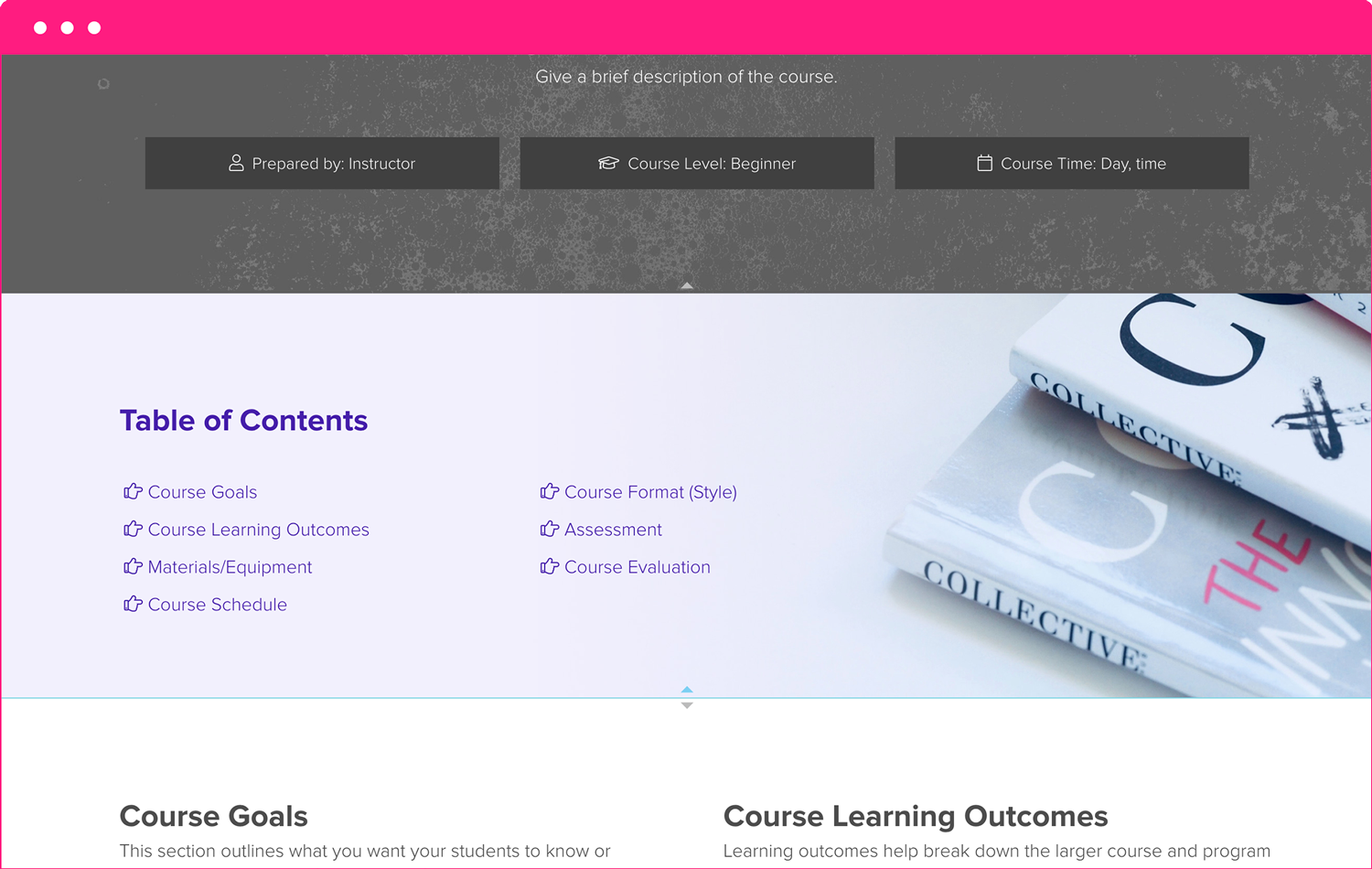
Course goals should focus on what students will learn, rather than what the instructor will teach. To formulate these goals, consider what students need to learn in terms of content, cognitive skills, and personal development. Clearly outline what you want your students to know or care about by the end of the course.
- Will students retain key concepts from your course years from now?
- How does this course fit into the broader curriculum of the discipline? Define the goals based on whether it’s an introductory, fundamental, or advanced course.
Learning outcomes break down these broad goals into specific, observable, and measurable objectives. These outcomes should center on student learning and development.
- How will taking your course transform your students?
- What specific skills and knowledge will students gain from this course?
List materials and equipment students will need
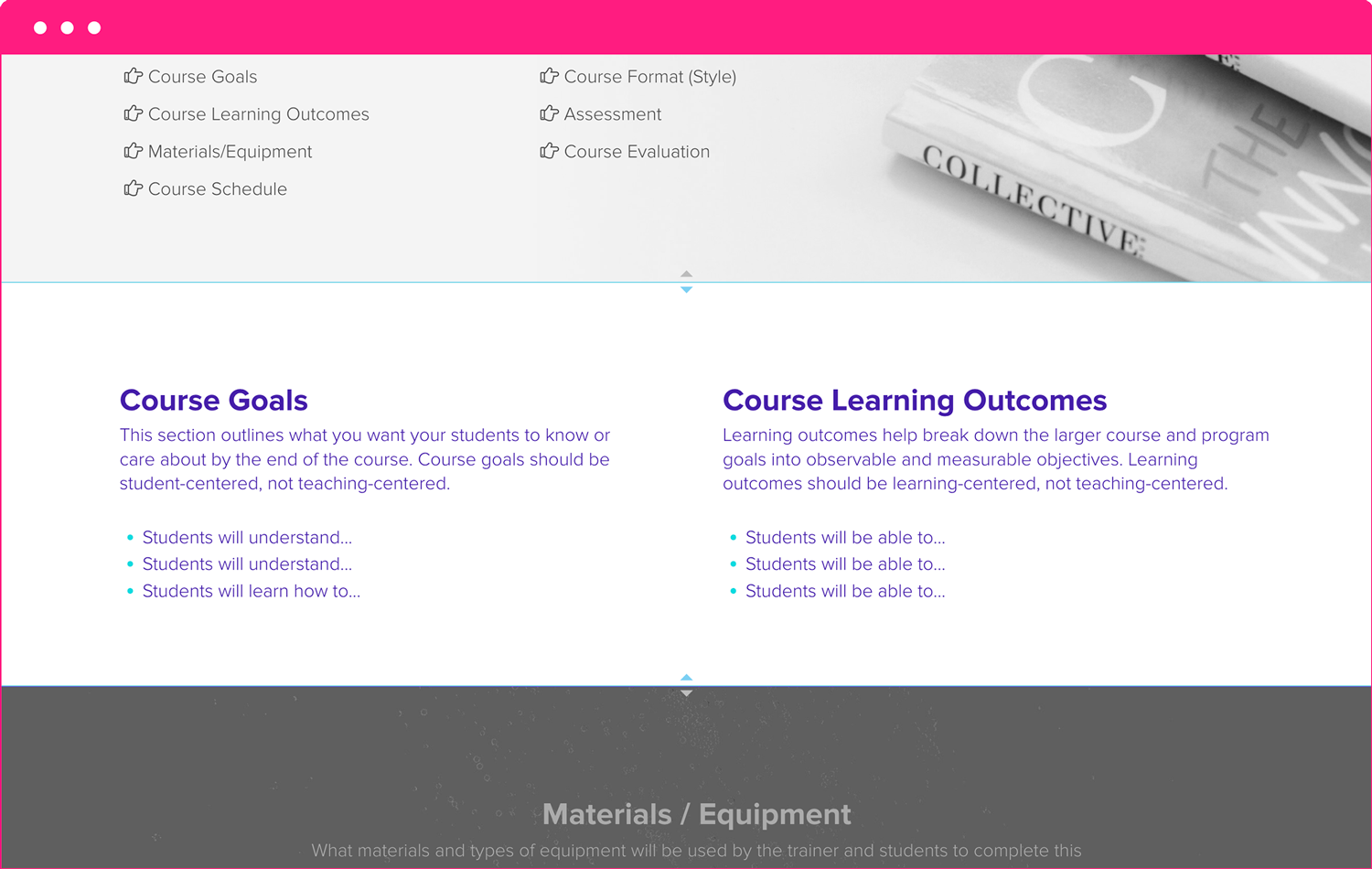
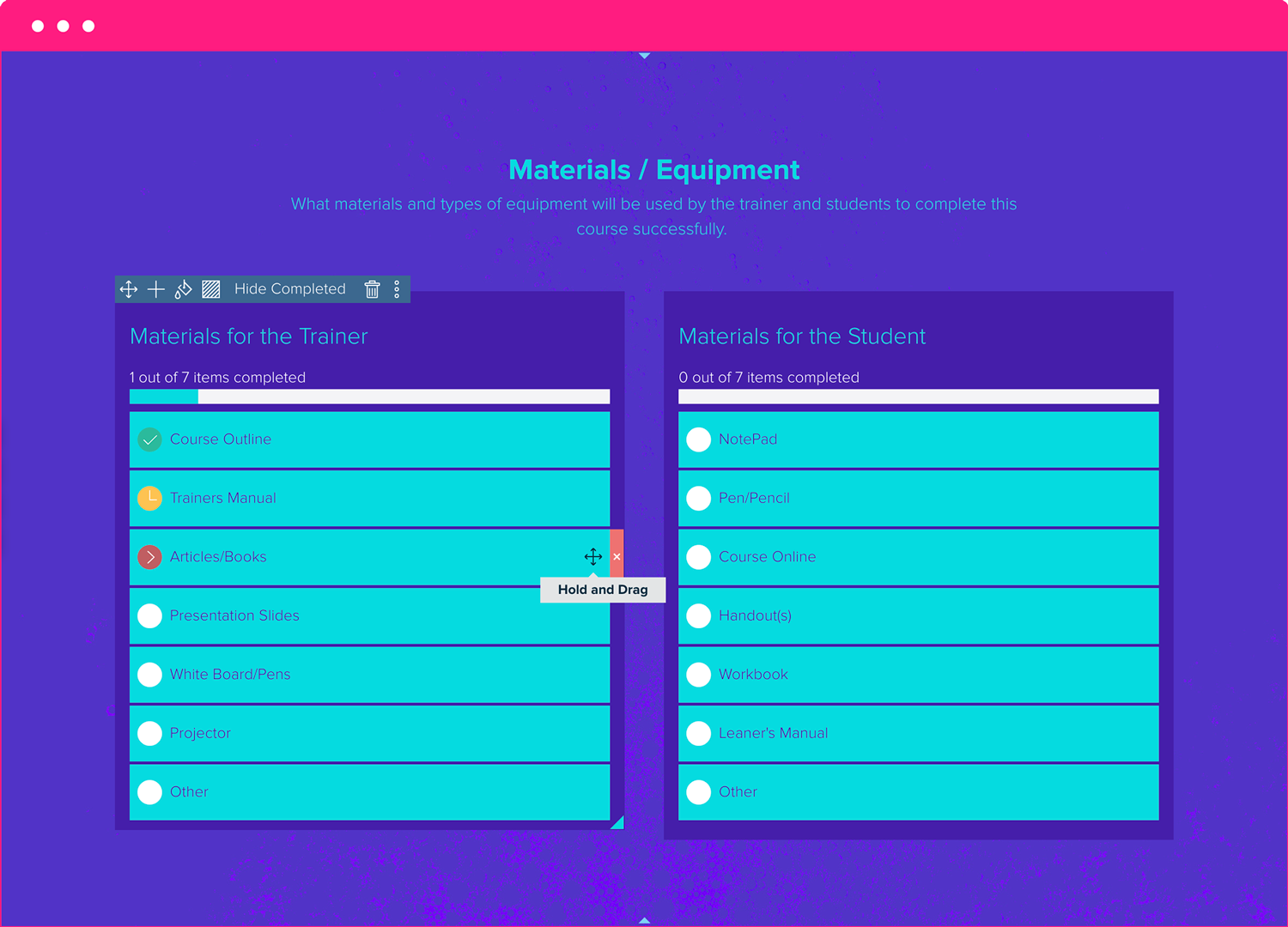
To ensure the successful completion of the course, both educators and students will need various tools and materials.
Materials for the Educator:
- Trainer’s Manual: A comprehensive guide with detailed lesson plans and instructional strategies.
- Articles/Books: Essential readings and references to support the course content.
- Presentation Slides: Visual aids to enhance lectures and presentations.
- Whiteboard/Pens: Tools for illustrating concepts and engaging with the class.
- Projector: Equipment to display slides, videos, and other multimedia resources.
- Other: Any additional materials specific to the course requirements.
Materials for the Students:
- Note Pad: For taking notes during lectures and discussions.
- Pen/Pencil: Basic writing tools for note-taking and completing assignments.
- Course Outline: A document that provides an overview of the course structure and key objectives.
- Handout(s): Supplementary materials that reinforce the course content.
- Workbook: A resource for practice exercises and activities.
- Learner’s Manual: A guide to help students navigate the course and its requirements.
- Other: Any other specific materials required for the course, such as lab equipment or software.
Plan your course schedule
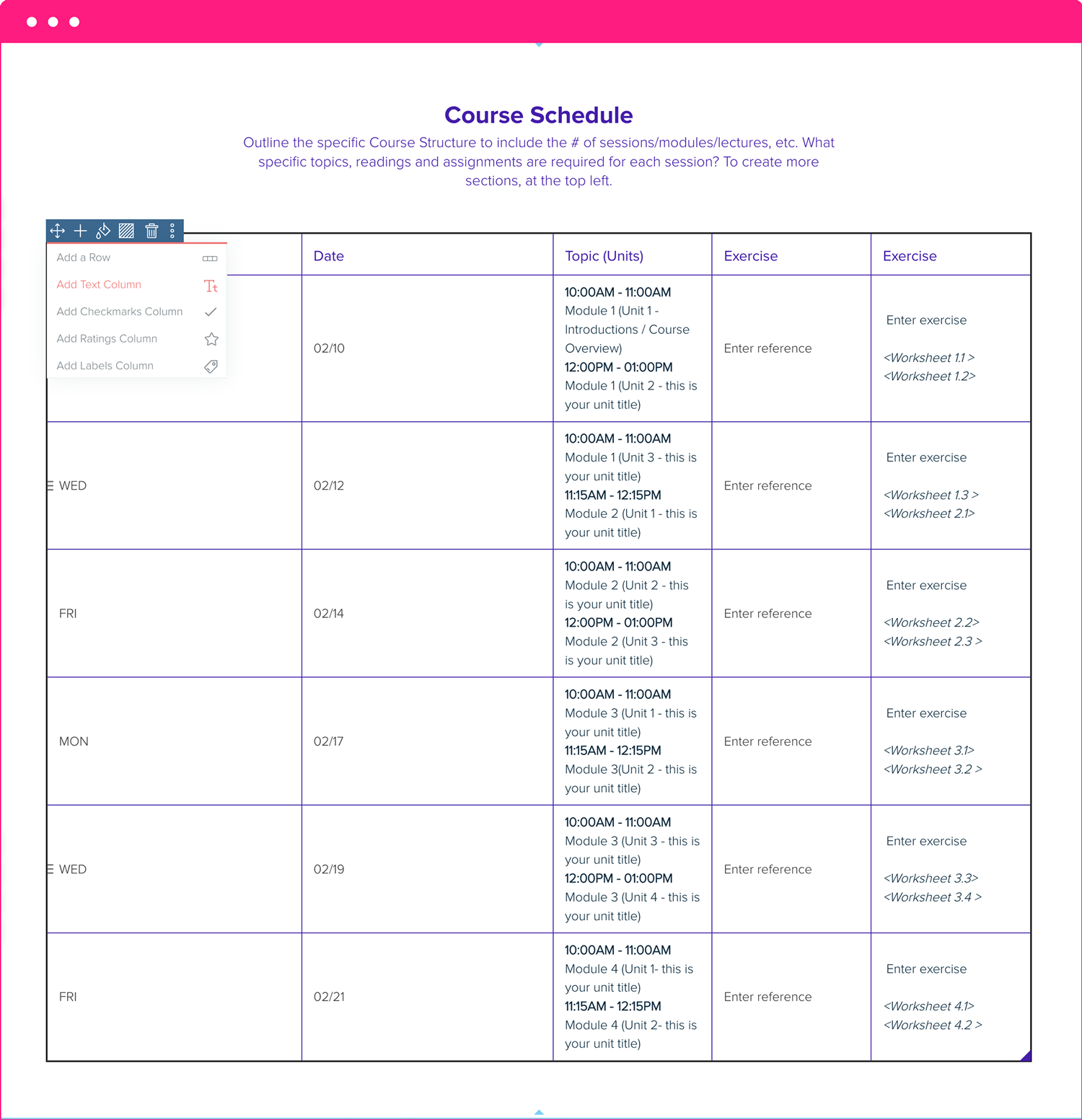
Outline the specific course structure, including the number of sessions, modules, and lectures. Specify the topics, readings, and assignments for each session.
When preparing an effective lesson plan, consult relevant academic calendars, and consider major holidays and significant campus events (such as Winter Break and Homecoming). Allow time for active learning during classes and for students to complete major assignments and prepare for exams.
At a minimum, your course schedule should include the date and time of each session, topics and units (modules), required readings, assignments, and major exams.
QUICK TIP: To create more sections in the course schedule, duplicate modules, tables, and sections to repurpose the content.
Map out your course format
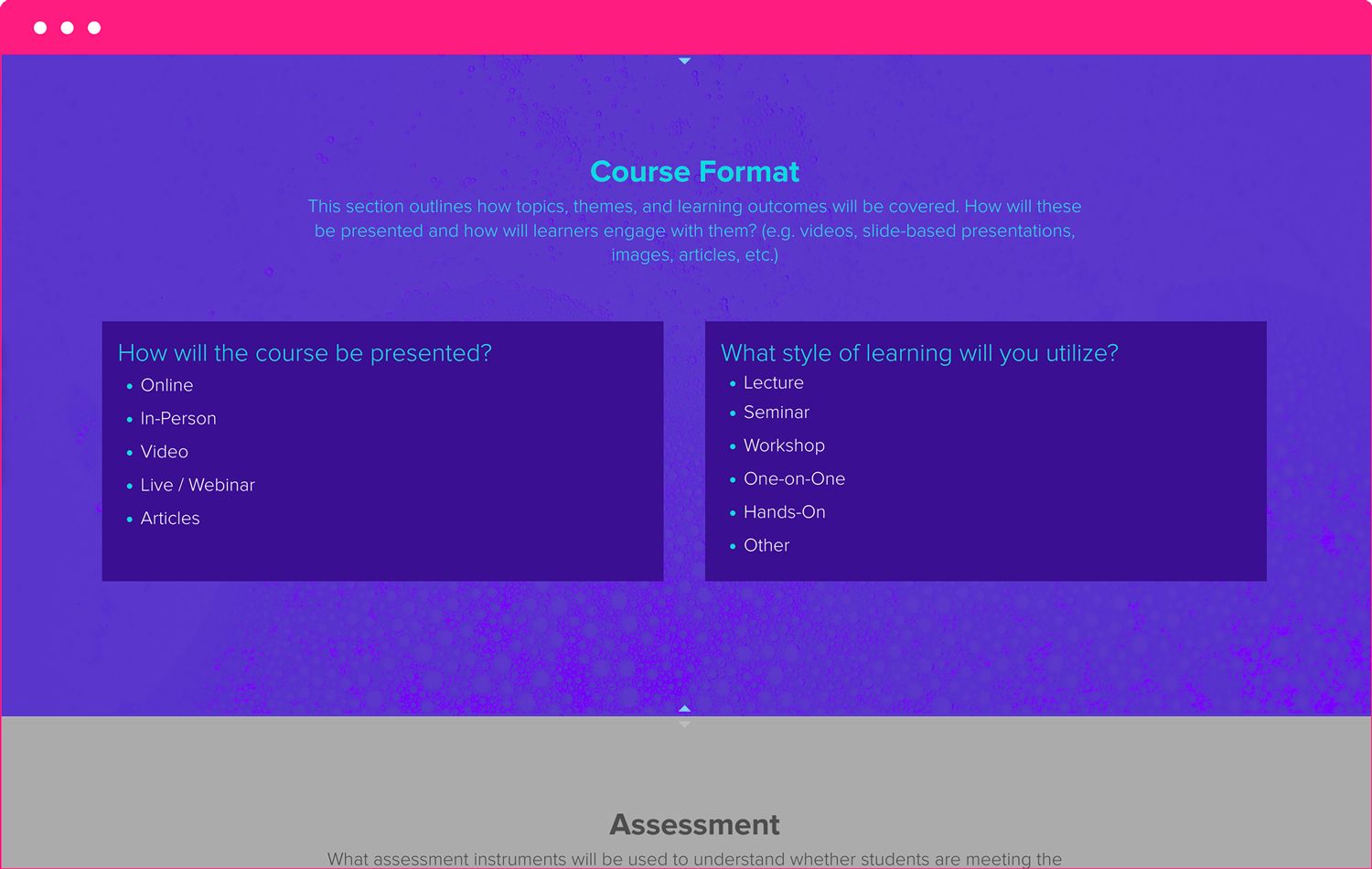
Detail how topics, themes, and learning outcomes will be covered. Explain how these will be presented and how learners will engage with them (e.g., videos, slide-based presentations, images, articles, etc.). Select and develop teaching methods and tools that are appropriate for the class size and consistent with the course goals.
Course presentation methods could include:
- Online
- In Classroom
- Video
- Live Webinar
- Articles
Additionally, specify the learning styles you’ll incorporate in your course:
- Lecture
- Seminar
- Workshop
- One-on-One
- Workbook
- Hands-on
- Other
Explain how you will assess your course
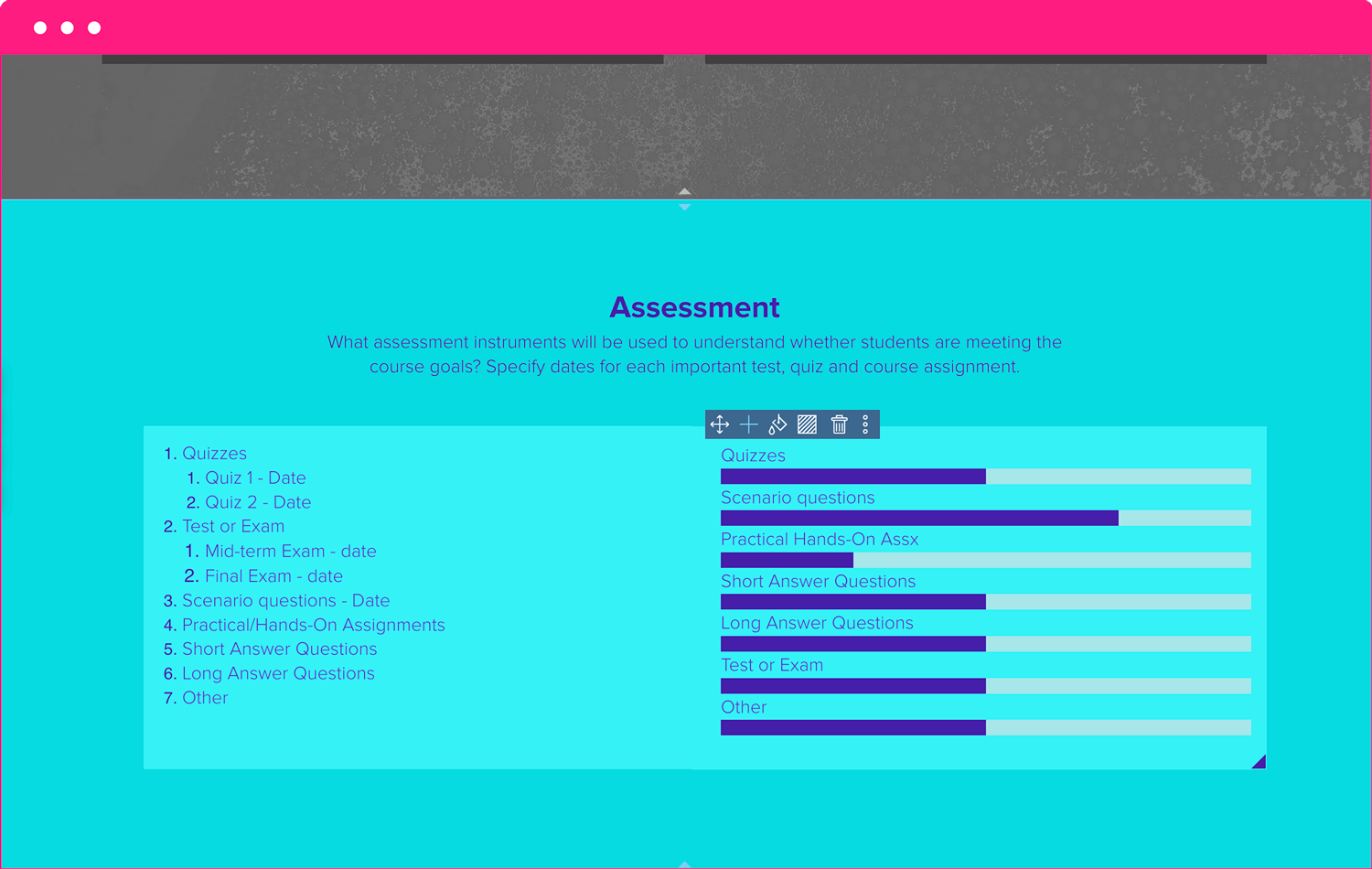
Specify the assessment instruments to be used to determine whether students are meeting the course goals. Include dates for each important test, quiz, and course assignment. Assessments may include quizzes, tests, exams, scenario questions, hands-on assignments, written papers, labs, etc.
Assessment Instruments:
- Quizzes: Short assessments to gauge understanding of specific topics.
- Tests/Exams: Comprehensive evaluations covering multiple topics and learning outcomes.
- Scenario Questions: Situational questions that test the application of knowledge.
- Hands-On Assignments: Practical tasks that require applying learned skills.
- Written Papers: Essays or reports of appropriate genre and length.
- Labs: Experimental or practical sessions to reinforce theoretical knowledge.
Key Considerations:
- Alignment with Course Goals: Ensure assignments reflect and help achieve course goals. For example, confirm that required papers are of appropriate genre and length, and allow sufficient time for completion.
- Relevance of Exams and Quizzes: Design exams and quizzes to reflect course goals and measure achievement of learning objectives.
- Skill Acquisition and Practice: Provide opportunities for students to acquire and practice skills needed for exams and major assignments.
- Practical Tasks: Assign practical tasks to help students practice and apply course content.
Example Schedule:
- Week 2: Quiz on introductory topics
- Week 4: Hands-on assignment submission
- Week 6: Midterm exam
- Week 8: Written paper due
- Week 10: Scenario-based quiz
- Week 12: Lab session
- Week 14: Final exam
By aligning your assessments with course goals and providing ample practice opportunities, you can ensure that students are effectively meeting learning objectives.
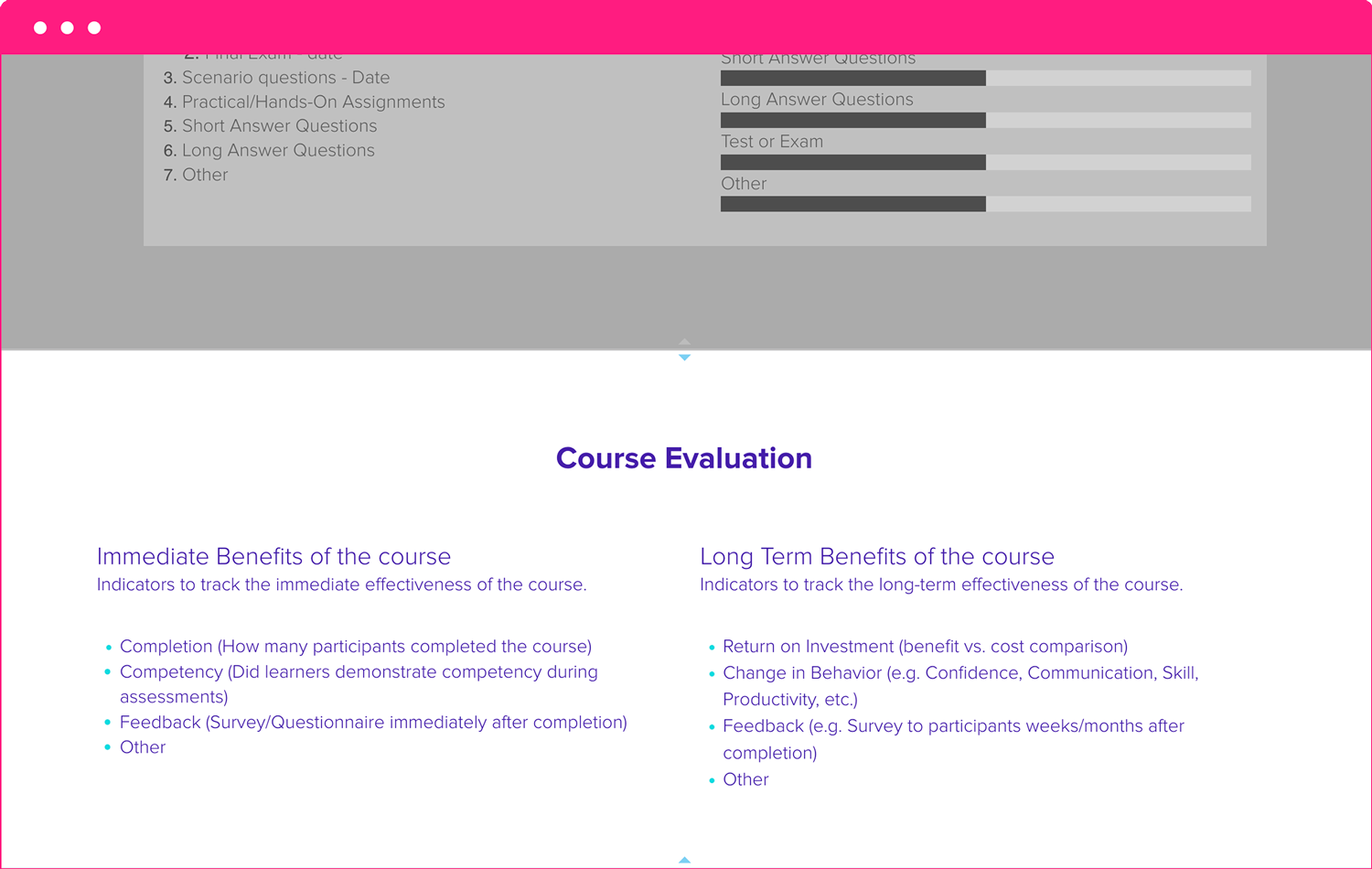
Evaluate your course and iterate for the next one
Course planning is an ongoing process. Taking the time to review each lesson once it’s completed can help you plan and revise future lessons. Focus on teaching core concepts and critical-thinking skills along with the course content.
Immediate Course Benefits:
- Completion: Track how many participants completed the course.
- Competency: Assess whether learners demonstrated competency during assessments.
- Feedback: Collect feedback through surveys or questionnaires immediately after course completion.
Long-Term Course Effectiveness:
- Return on Investment: Compare the benefits of the course against its costs.
- Change in Behavior: Monitor changes in confidence, communication skills, productivity, etc.
- Long-Term Feedback: Conduct surveys with participants weeks or months after course completion to gauge the lasting impact.
By evaluating both immediate and long-term indicators, you can continuously improve your course to better meet learners’ needs and achieve your educational goals.
Share your course plan as a link, monitor, evaluate & iterate
Once you’ve created your sample lesson plan with Xtensio’s editor, you can:
- Send the live link to share it as a responsive webpage (with optional password protection).
- Export it as a PDF to post on your bulletin board.
- Embed it on your website.
The course plan is adaptable, just like other Xtensio tools. It can and should be repurposed, revisited, and revised regularly.
Creating a course outline is crucial for a smooth and engaging learning experience. Clear goals and a solid plan help both you and your students succeed. We hope that you will make a lasting impact on your students’ learning journeys.
Written by


Teamspace for smart, beautiful deliverables.






375,214 users and counting…
