
How to Write a Business Requirements Document
Updated by Xtensio
A business requirements document is used to detail a business’s needs when seeking a new technology provider, consultant or outside vendor. The BRD outlines the goals and expectations of a project, including both functional and non-functional project requirements. Use this step-by-step guide to create and iterate on your business requirements document, easily. Explore this template.
Xtensio is your team space for beautiful living documents.
Create, manage and share business collateral, easily.
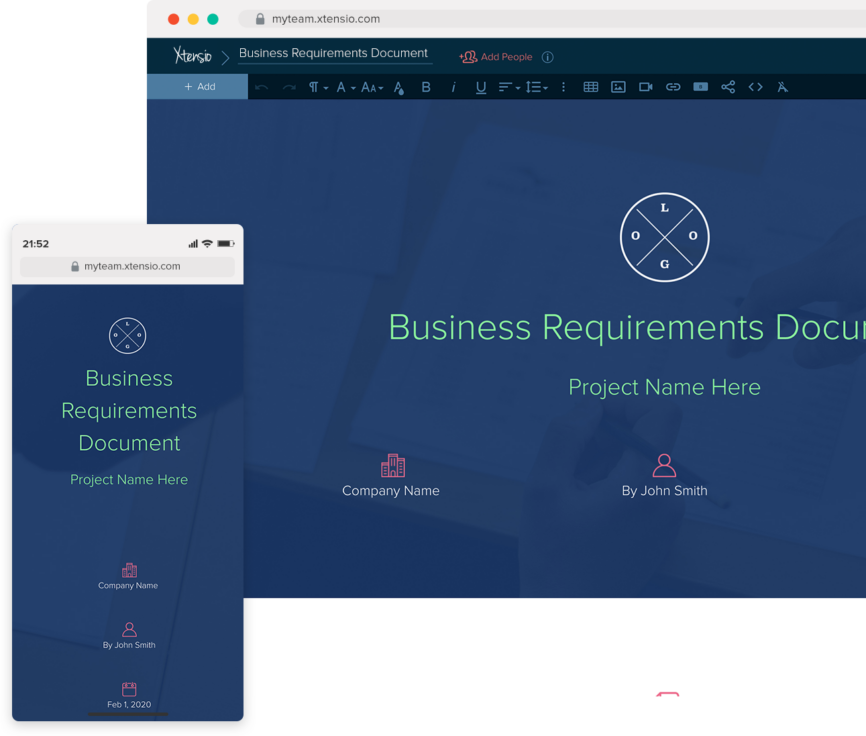
Table of Contents
Everything you need to write a successful business requirements document
When kicking off a project, it’s imperative that all project stakeholders understand the expected outcomes of the partnership. That’s where a business requirements document (BRD) comes in handy. Generally, a BRD is used to detail a business’s needs when seeking a new technology provider, consultant, or outside vendor.
The project requirements document template helps your team details a project and outline the business objectives you expect to achieve. Explain functional requirements, scope, and both your business and customer expectations related to the project in detail and include customer expectations, detailed technical and experience requirements, roadblocks, questions, and comments.
- Concisely and visually describe the problems the project is trying to solve and the required outcomes needed to deliver value.
- Gain agreement with project stakeholders and set measurable business objectives.
- Establish a foundation to communicate solutions and expected deliverables and outcomes to satisfy the customer’s and business needs.
With Xtensio, you can easily create business requirements documents tailored to your individual projects and needs. Loop in colleagues, clients, and key stakeholders to create and iterate on your BRD. You can work hand-in-hand with colleagues on a live doc, leave feedback, and share a link so everyone has the information they need to complete your projects.
1. Create your business requirements document header and outline the project overview
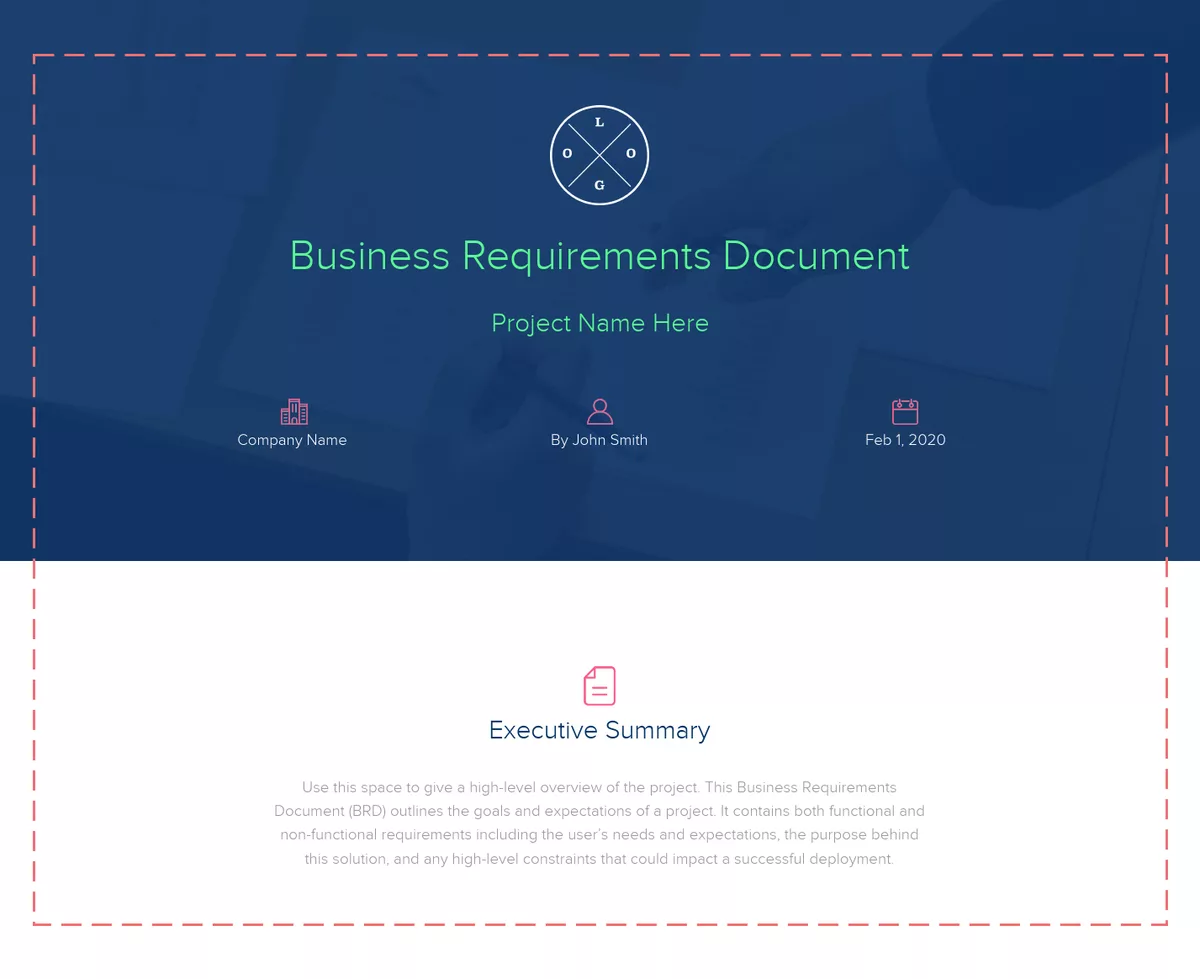
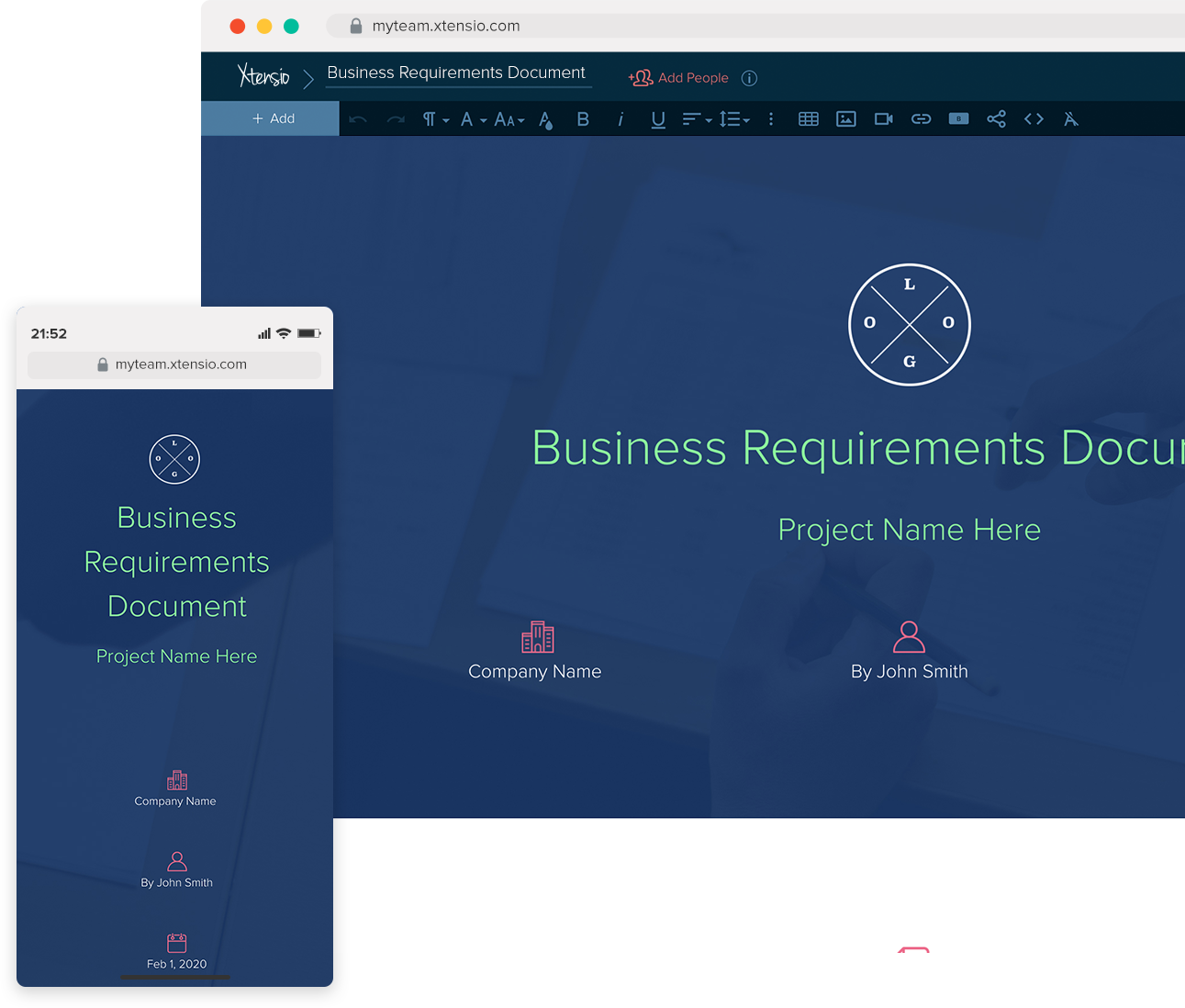
Every business project is unique depending on its opportunity, requirements, budget, timeline, etc. But the basic structure of BRD will essentially be the same regardless of your project, goals, and requirements. Introduce your business requirements document with your company name and logo, add the project name, the name of the person who created the requirements document, and the date. You can also update the folio color scheme and background to match your company branding.
Next, include an executive summary that summarizes the project, its requirements, and expectations for your overall business goals.
QUICK TIP: Once you set up your header section, you can save a custom template to easily repurpose other requirements docs.
2. Outline the project objective and write your needs statement
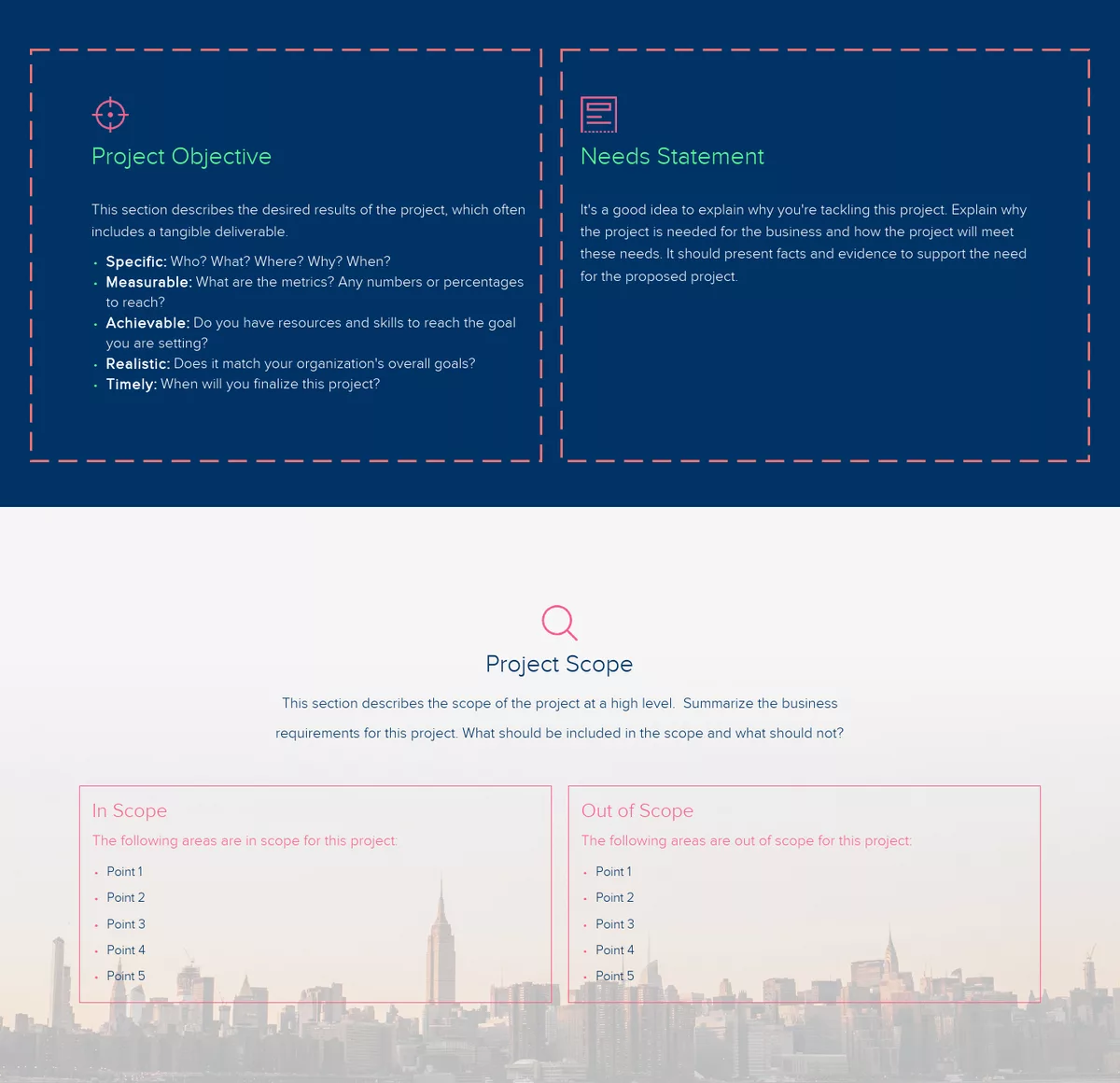
Your project objective should describe the desired results of this project, which often include tangible deliverables and high-level KPIs. Think of SMART goals here:
- Specific: Who? What? Where? Why? When?
- Measurable: What are the metrics? Any numbers or percentages to reach?
- Achievable: Do you have the resources and skills to reach the goal you are setting?
- Realistic: Does it match your organization’s overall goals?
- Timely: When will you finalize this project?
It’s a good idea to explain why you’re tackling this project in your needs statement. Explain why the project is needed for the business and how the project will meet these needs. It should present facts and evidence to support the need for the proposed project.
3. Define the project scope
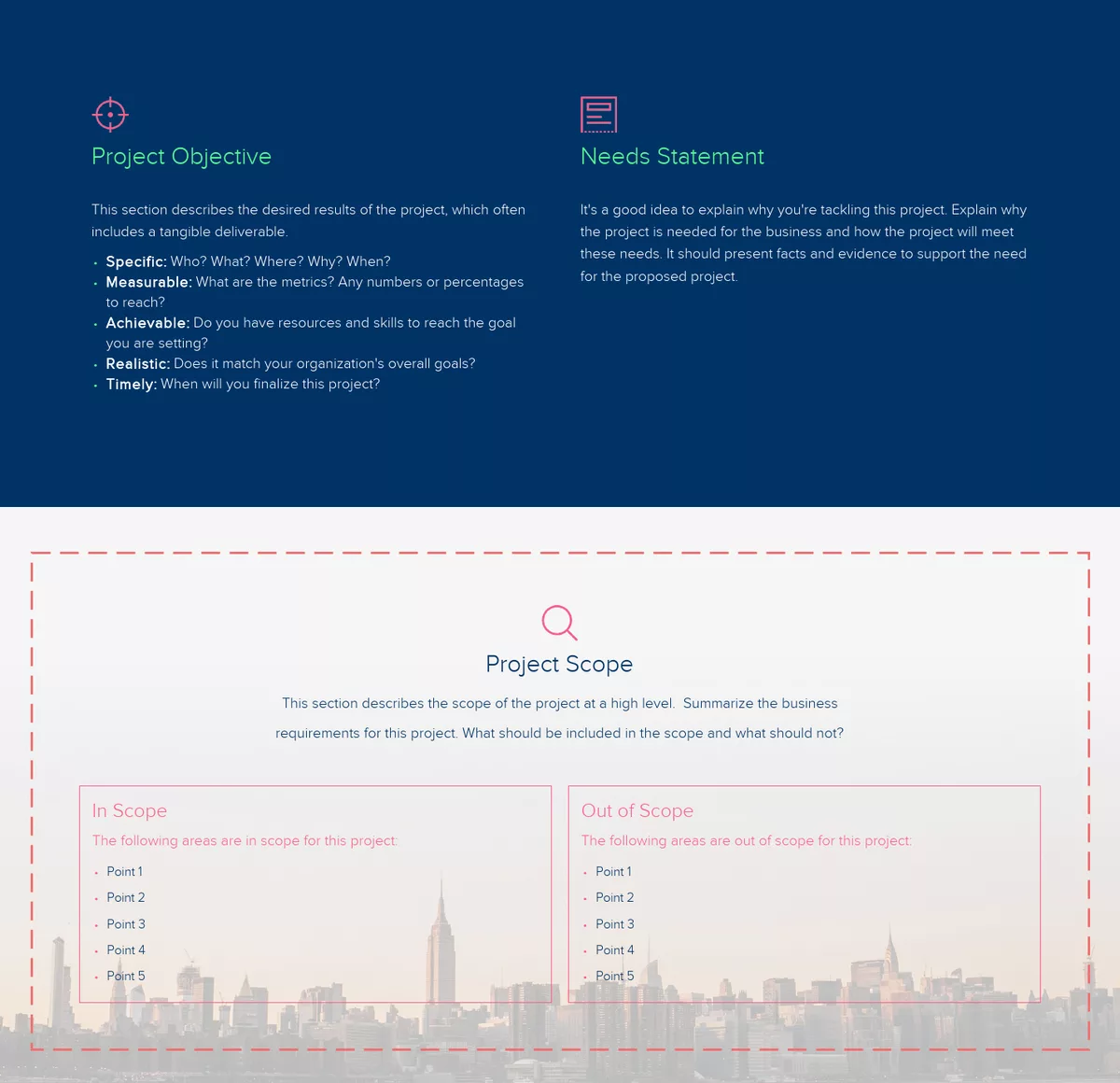
The project scope draws the boundaries of the project and helps managers decide what is included in the project and what isn’t. Having a clear scope helps keep the team aligned and avoids unnecessary wastage of resources. With a clear project scope, you’ll be able to better describe your need and make stakeholders understand the project details, tasks, and deliverables.
Summarize the business requirements for this project. What should be included in the scope and what should not?
4. Detail functional and non-functional requirements
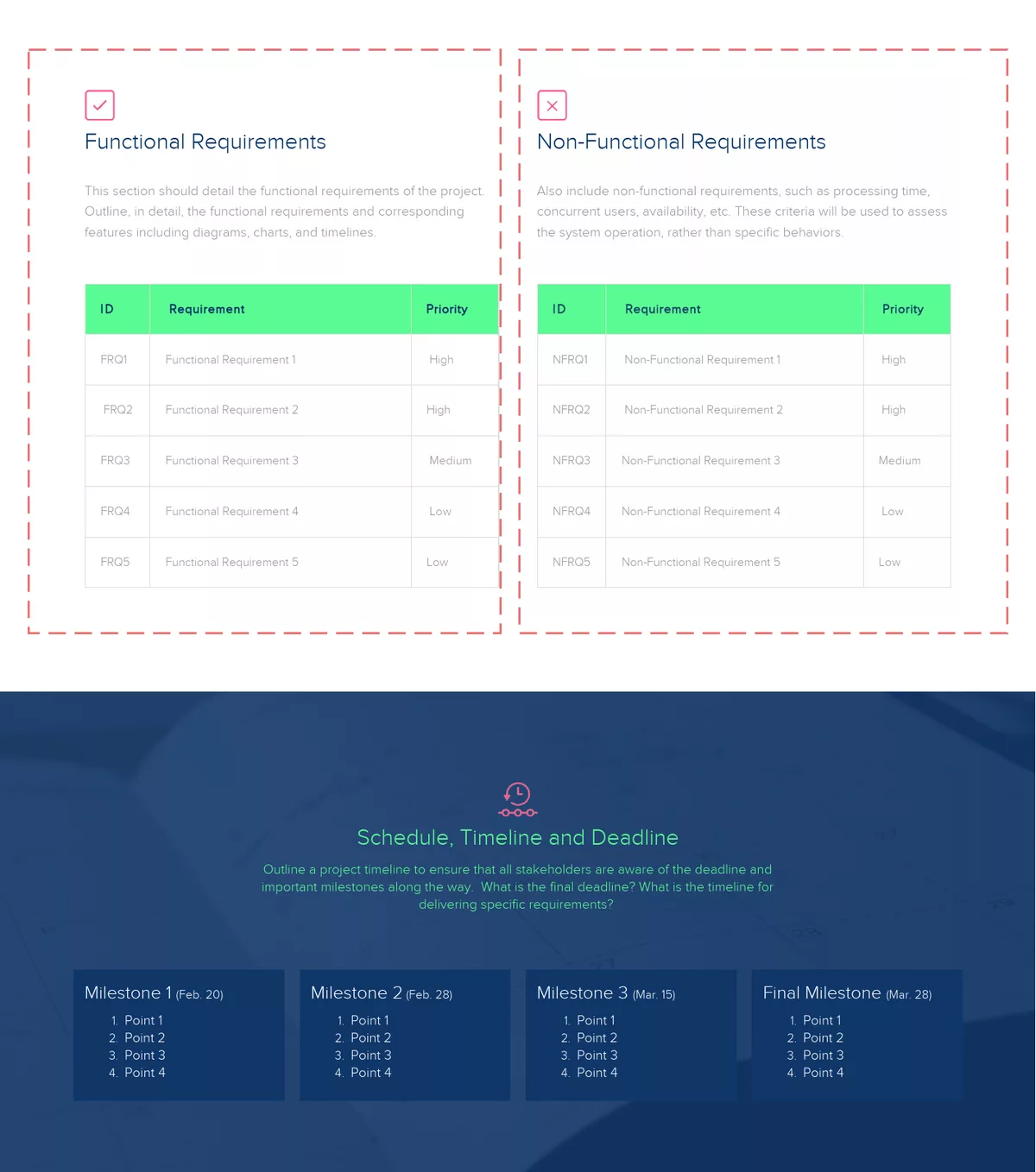
All project functionalities or special requests need to be included in your BRD. Talk to all internal stakeholders and understand what needs to be built and what is required to build it.
Detail the functional requirements of the project and corresponding features including diagrams, charts, and timelines. This could be personnel requirements, budget, and other key resources you’ll need to implement the project. Also include non-functional requirements, such as processing time, concurrent users, availability, etc. These criteria will be used to assess the system’s operation, rather than specific behaviors.
5. Highlight the project schedule, timeline, and deadlines
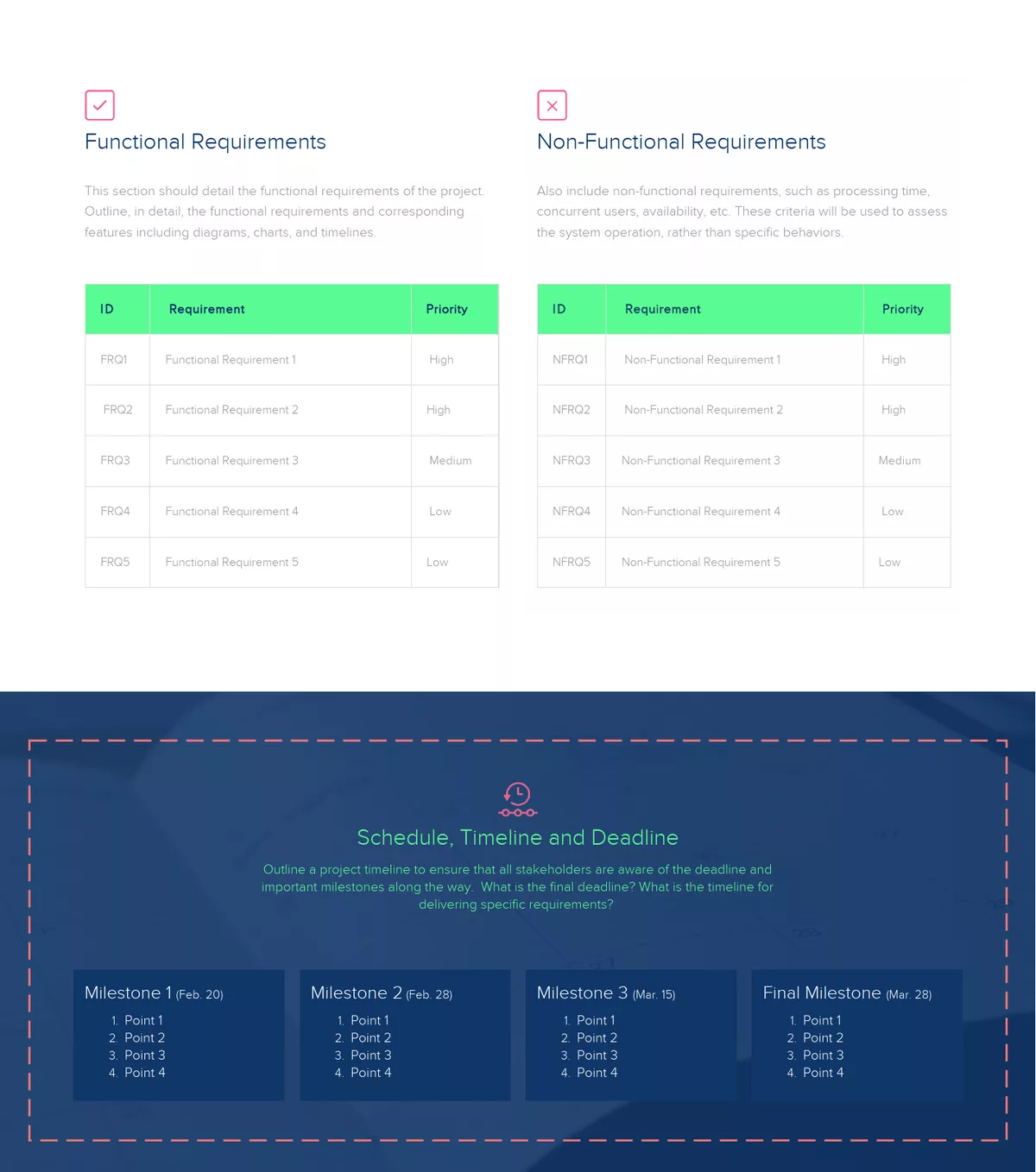
Outline a project timeline to ensure that all stakeholders are aware of the deadline and important milestones along the way. Having a schedule in place helps you gain credibility with vendors, clients, and contractors, while also keeping your own team accountable. Make sure to account for any unforeseen challenges or roadblocks your team might face.
What is the final deadline? What is the timeline for delivering specific requirements? Outline key milestones, including tasks and deliverables for each.
6. Identify risks and include a glossary of terms
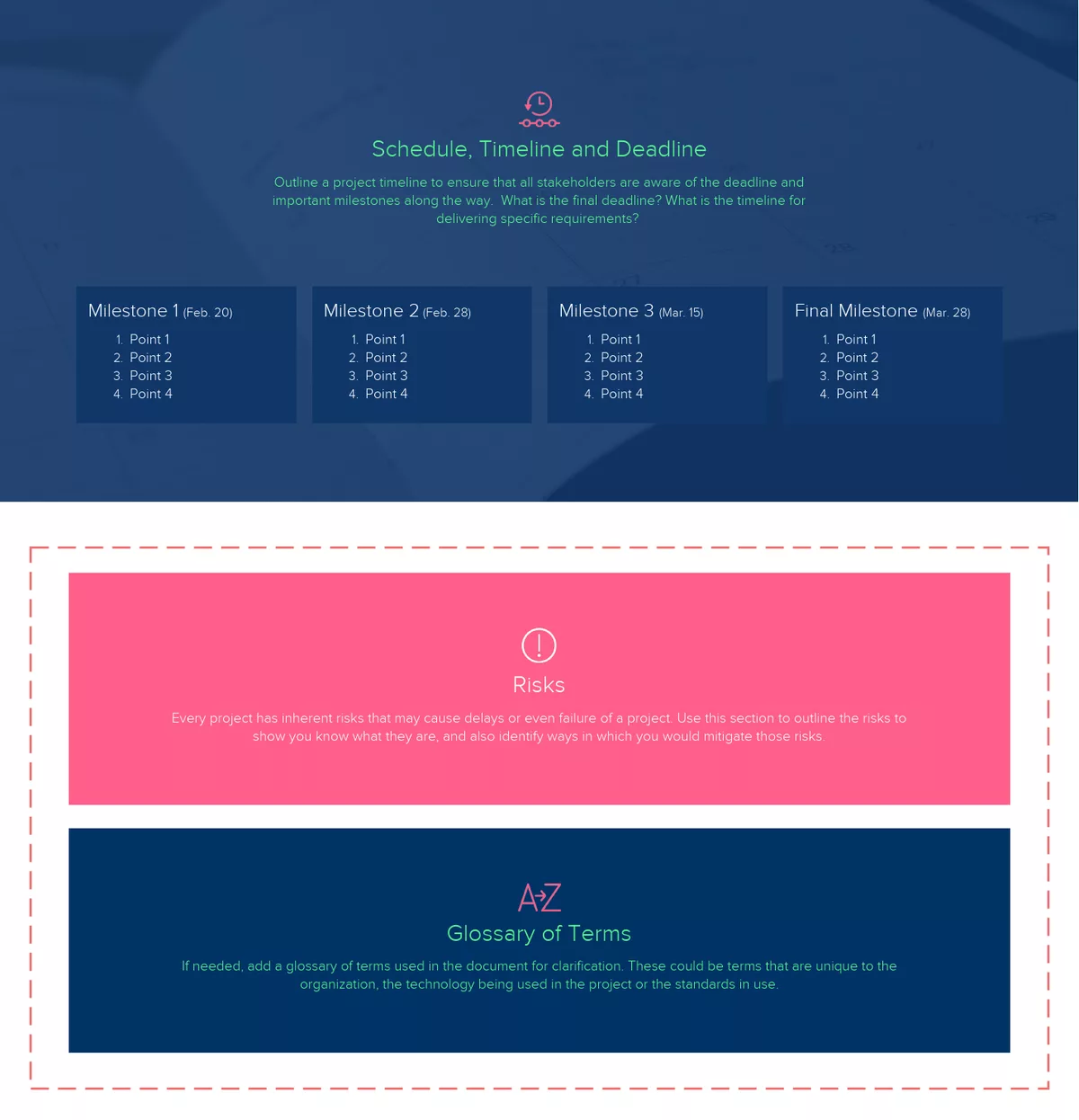
Every project has inherent risks that may cause delays or even failure of a project. Outline the risks to show you know what they are, and also identify ways in which you would mitigate those risks. If needed, you should also add a glossary of terms used in the business requirements document to clarify any questions external stakeholders might have. These could be terms that are unique to the organization, the technology being used in the project, or the standards in use.
Share your business requirements document as a link, monitor, evaluate & iterate
When you’ve finished creating your BRD with Xtensio’s editor, you can send the live link to share it as a responsive webpage (and add password protection), export a PDF or present it as a slideshow in a meeting – you can continuously optimize with new learnings. The business requirements document template is adaptable just like other Xtensio tools, it can and should be repurposed, revisited, and revised regularly.
Written by

Design, manage and share beautiful living documents… easily, together. Explore Xtensio
- Click and edit anything… together.
- Customize to match your branding.
- Share with a link, present, embed or download.

Teamspace for smart, beautiful deliverables.






375,214 users and counting…
