
How To Create A User Persona
(with Free Template and Examples)
User personas help you design better products, campaigns, and experiences by centering real people. In this guide, we’ll walk through each step — with examples, tips, and a free editable persona template to build your own.
Listen to this Article:
Xtensio is your team space for beautiful living documents.
Create, manage and share business collateral, easily.
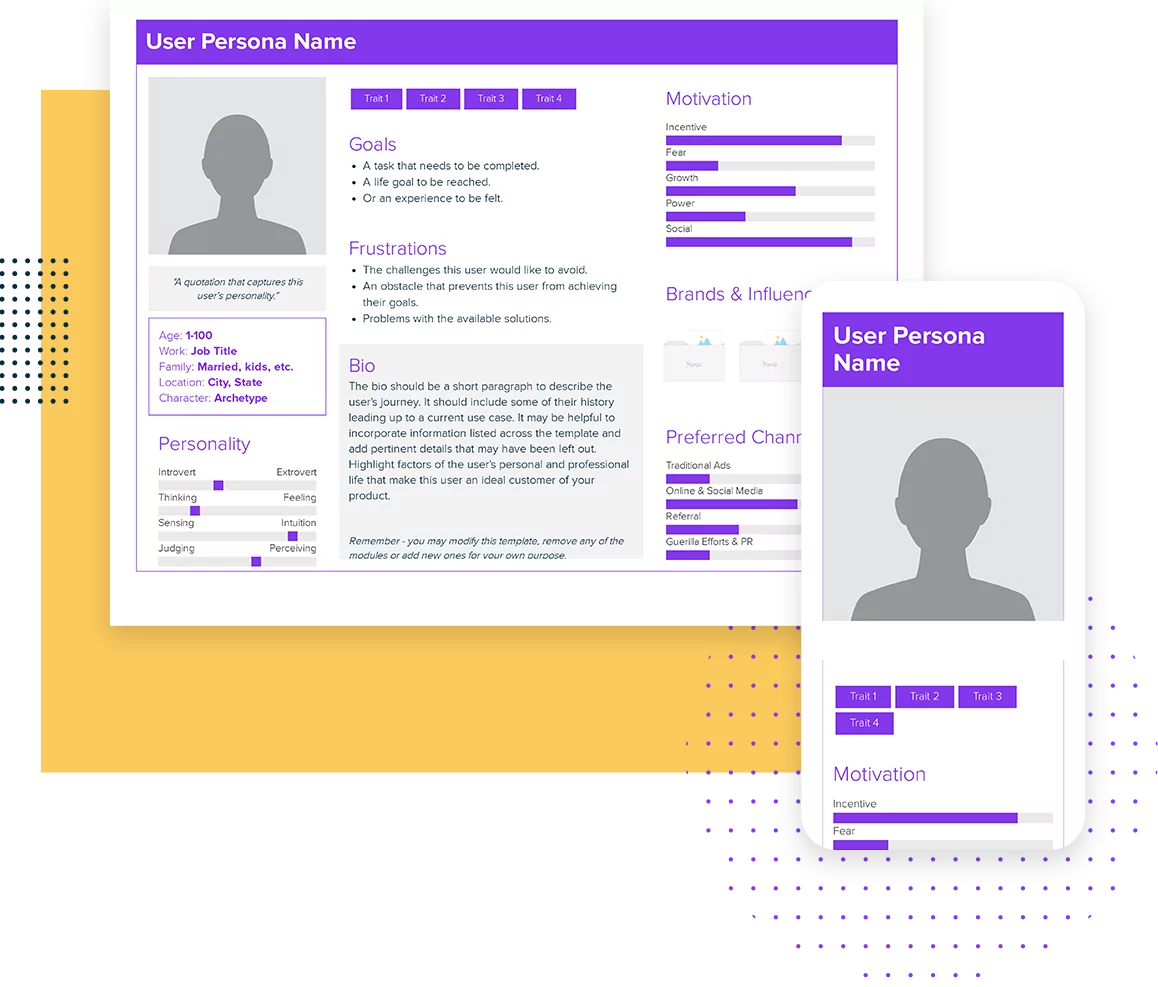
Table of Contents
Why Use User Personas?
User personas help you understand your audience on a deeper level, making it easier to create products and services that truly resonate with them. By putting a face and story to different user types, you can design and market more effectively, knowing what your users want and need. It also helps keep your team on the same page, ensuring everyone is working towards the same goals with a clear understanding of who they’re serving. In short, personas make your work more targeted and impactful.
Common Mistakes to Avoid
Here are some pitfalls to watch out for: One common mistake is making too many personas, which can dilute their effectiveness and make them harder to use. Another is relying on assumptions instead of actual data—this can lead to personas that don’t accurately reflect your audience. It’s also easy to make personas too generic, which defeats their purpose. Lastly, not updating personas regularly can make them outdated and less useful as your audience evolves.
Step-by-Step Guide to Creating Personas
Start by conducting thorough research to gather data about your audience. Look for patterns in this data to identify distinct user groups. Next, create detailed profiles for each persona, including their demographics, goals, and challenges. Use these personas to guide your design and marketing decisions, ensuring they stay relevant and helpful. Finally, regularly update your personas as your audience evolves to keep them accurate and effective. Let’s dive right in.
How To Create User Personas (or a Buyer Personas): The Intro
We suggest talking to consumers (and your potential target audience) before using the user persona creator, so send emails, hop on calls to do user interviews, and run surveys and questionnaires before creating personas. Record and synthesize information. Display what you’ve learned in this document. Yes, this will take effort; it will take digging. But this work is necessary – User Personas (aka brand persona, buyer persona), when authentically completed, become go-to documents to ensure every business, design, and marketing decision resonates with target consumers. Create personas; they will help attract customers with the right intention and qualifications. You can use our instructional template for creating your customer personas (user personas). Or, to create a persona simply pick one of the buyer persona examples below and start editing.
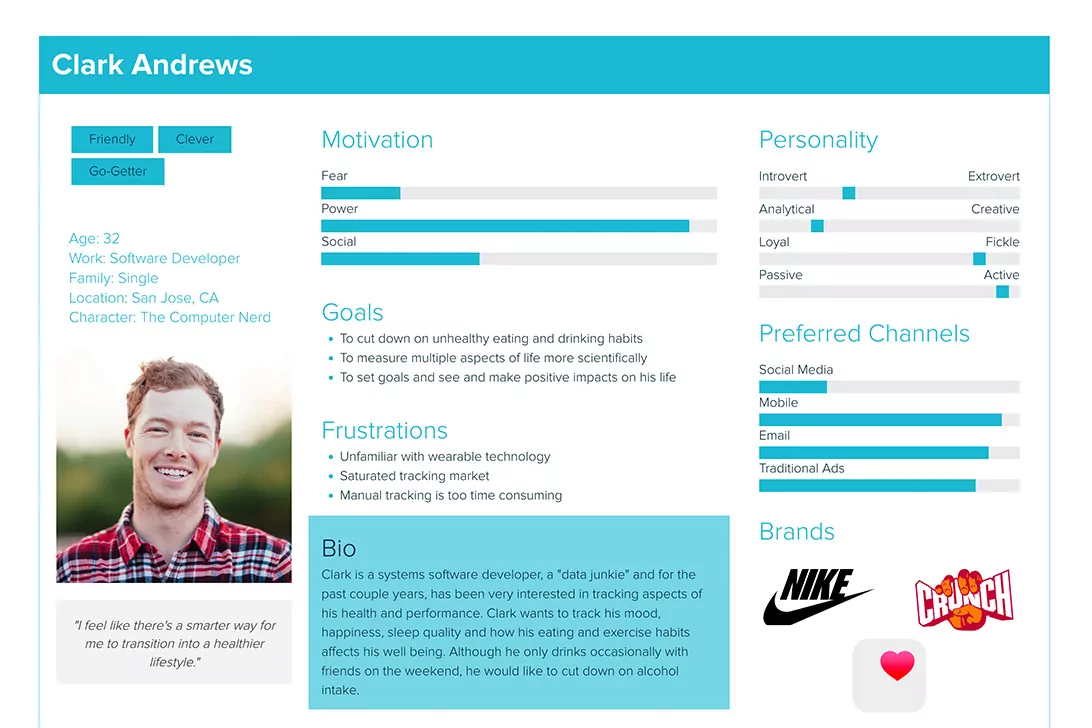
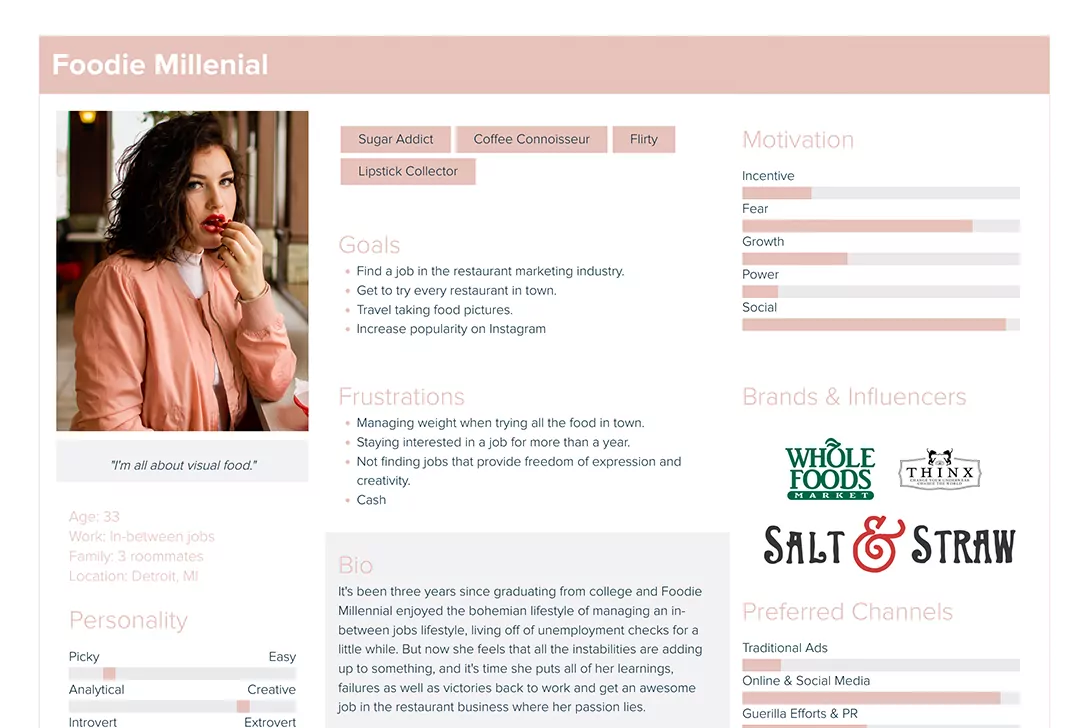
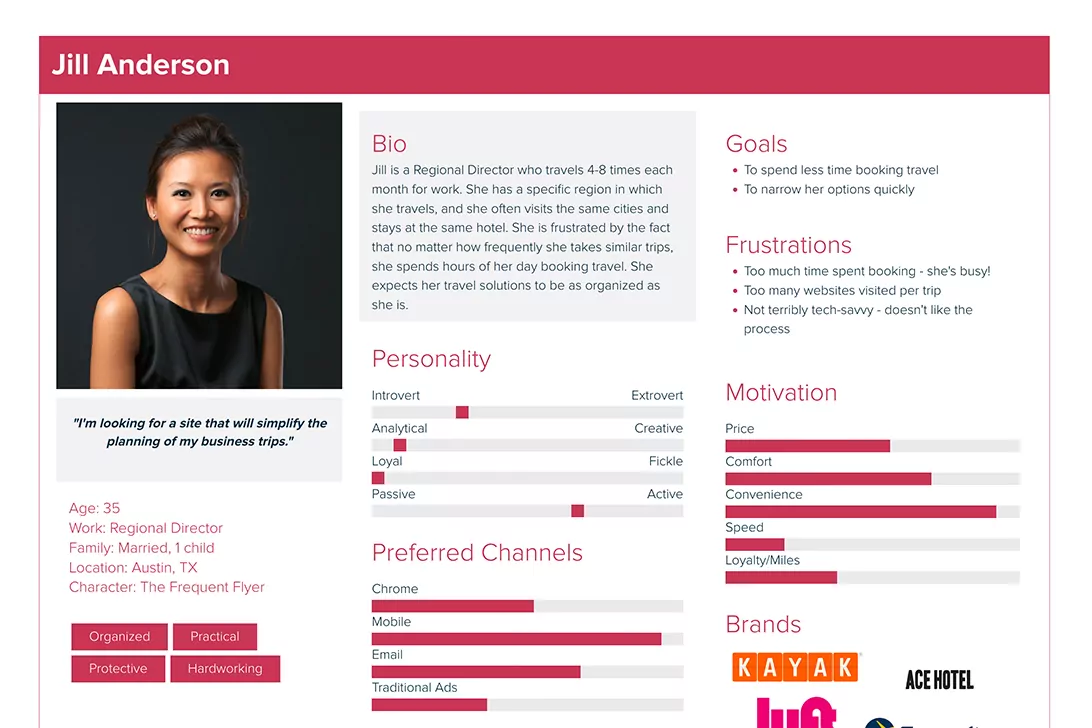
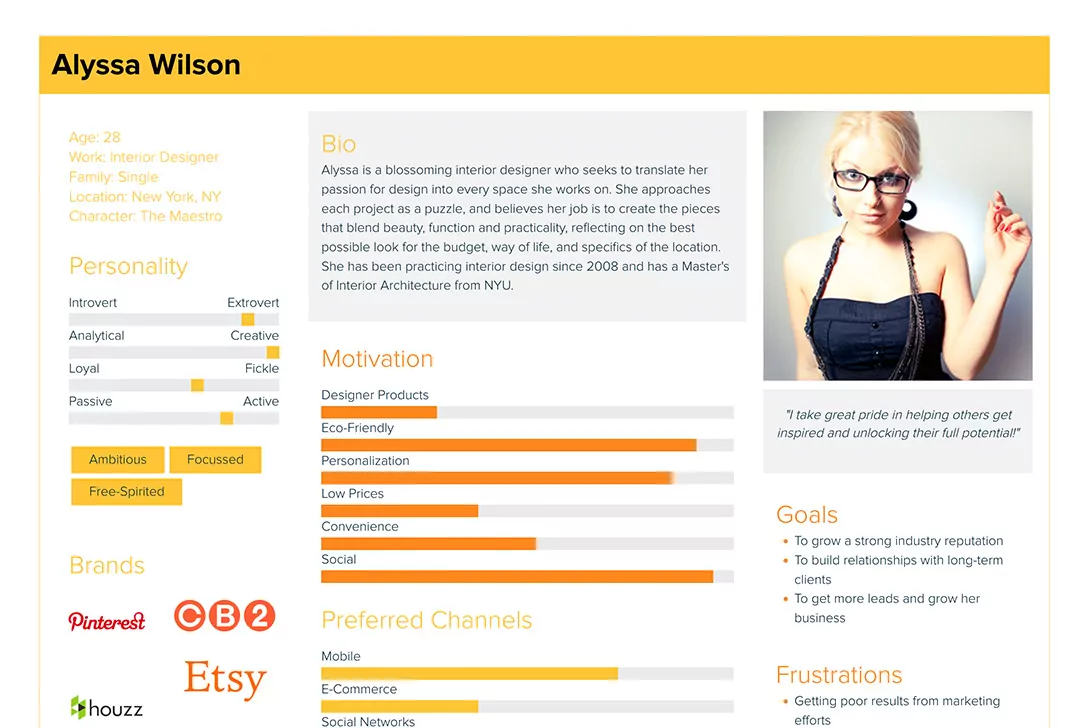
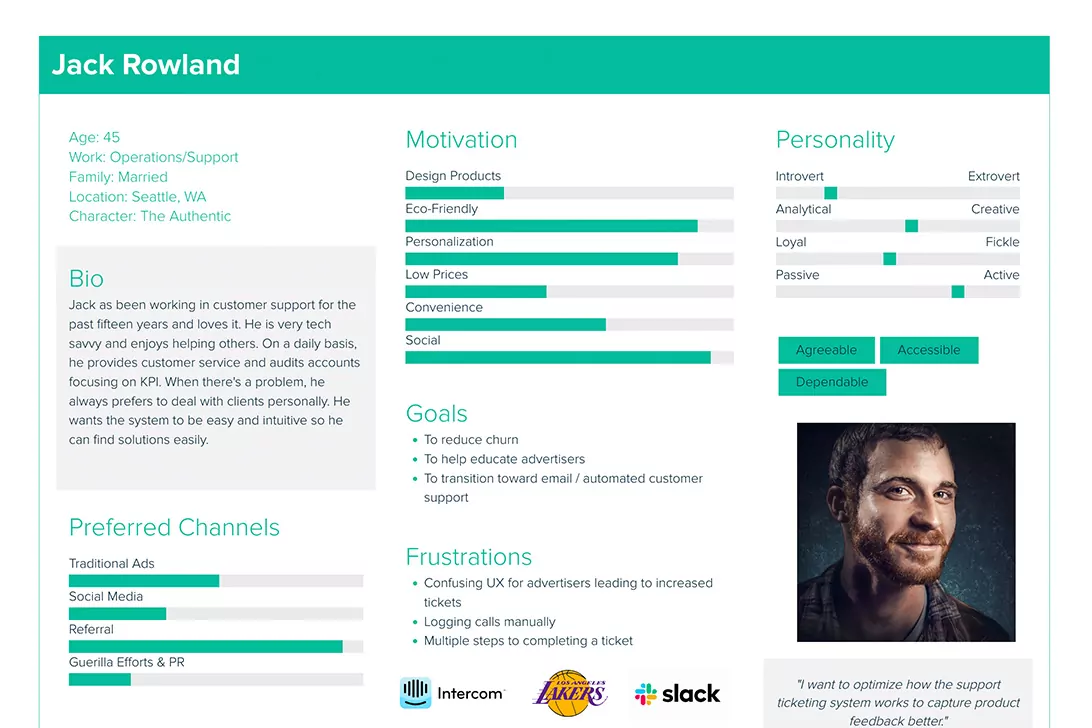
Fluff is dangerous. Internal team members, external investors, and consumers will cast aside brand personas if sections strike as inauthentic — if a quote is a cliche or a picture is obviously a stock image.

Bonus: Conduct User Interviews with real customers or potential audiences to capture valuable insights.
How To Create a User Persona: The Basics
Title
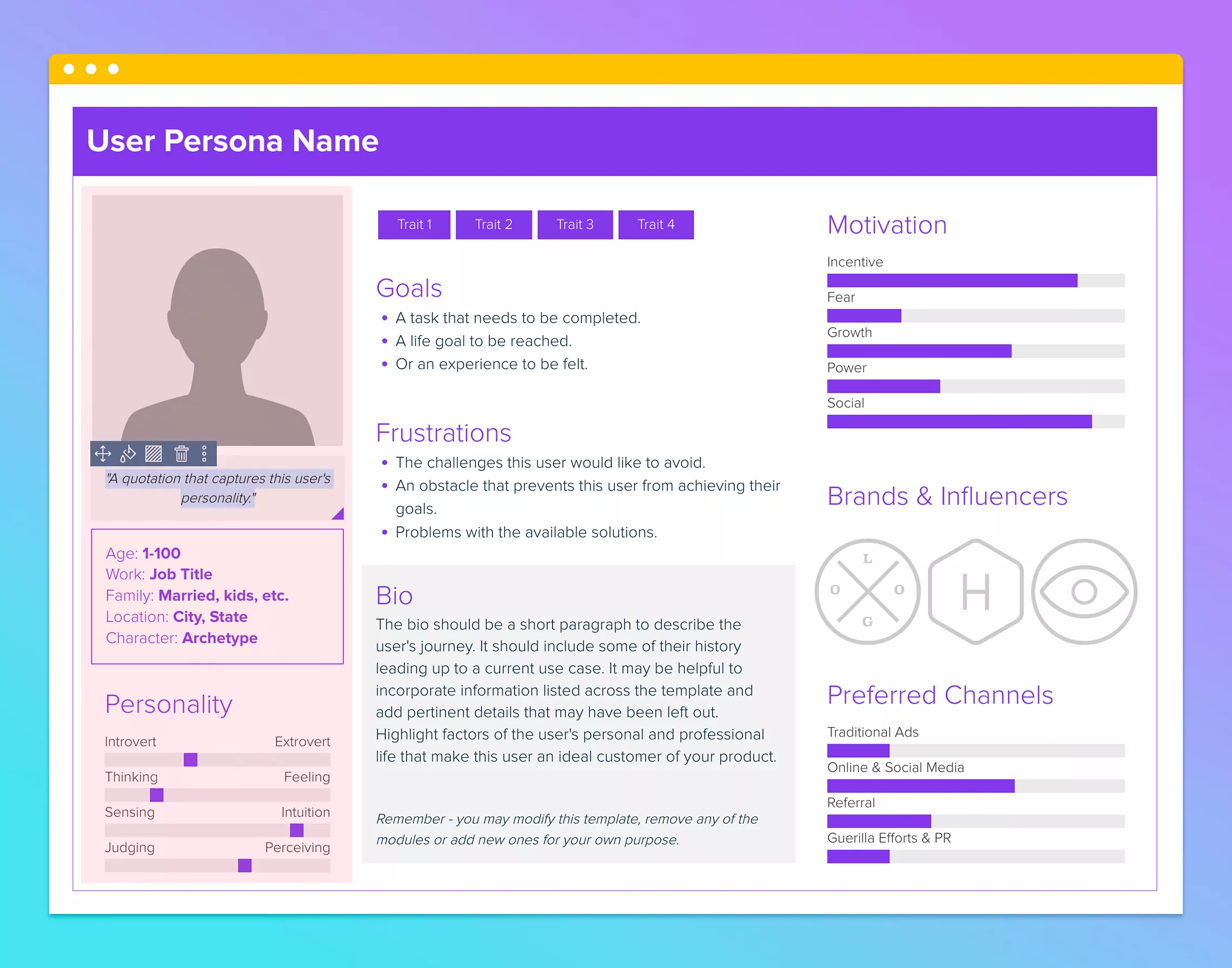
The Persona title allows you to easily reference a group of users during discussions. Choose titles wisely. If you give user personas human names, make sure those viewing the documents don’t make generalizations based on names alone. A Persona named “Emily” doesn’t mean all users in that category are female.
If you use titles, make sure they are specific. “The Aspiring Entrepreneur” is too general. Is she a student? An individual with a passion project? Before settling on a title, closely consider the message it sends to the target audience and the information it conveys to the user personas.
Image
Don’t forget to upload a photo! Give your user persona a face that reflects the descriptions used throughout the template. If possible, use a photo of a real consumer. If you are going to use a stock image, make your search specific, and pick a buyer persona image that conveys something about this person’s daily life and personality.
Show the individual in a space that gives insight into where your product fits into his/her life. A UX/UI designer might be in a studio, a student in a classroom, or a part-time dad at his home office.
Xtensio Tip: Select from thousands of free to use images in our integrated stock image library.
Quote
Capture the user persona’s attitude towards your product or service. Why is he or she interested in what you’re offering? What type of solutions is the user persona looking for? What matters most to him?
Use real quotes or comments acquired from customer interviews, surveys, or questionnaires.
Demographics
This section gives viewers quick insight into the user persona’s background, lifestyle, and behavioral practices. Information should reflect trends from interviews, questionnaires, or surveys.
A quick way to find statistics on consumer demographics is by using Google Analytics. Collect data on the origin, age, and marital status of those currently visiting your site or interacting with your company on social media. Reviews and online comments are also great sources for exploring demographics.
Character (Archetypes & Tier)
Archetypes are widely understood identities that characterize an individual’s personality, motivations, and goals. Be careful not to undermine user personas by using jargon like “visionary” or “radical” without going into detail about what exactly these words imply.
Continue asking questions. Why are these individuals considered visionaries, how do they want to use your product? You don’t need paragraphs detailing user archetypes, but make sure you have the answers on file. Still unclear about archetypes? Here are 12 common archetypes to prompt your definition of those using your product.
The tiers section is one of the most important sections when it comes to defining user personas. Tiers indicate levels of engagement users have with your product, or where they fall on the adoption curve. For example, the “tier” option can range from ‘first-time users’ all the way to ‘late adopters.’ If you’re building an industry-specific product, your tiers can be ‘professionals’, ‘prosumers’, or ‘enthusiasts.’ Tiers can also refer to users’ level of commitment to your product—free users, paid users, or enterprise users. Again, this will become clear with user research.
We recommend making different personas to represent each varying tier and fill out the user persona comparison to segment your users. Many product design and marketing decisions will come down to which tier of users you are prioritizing.
Personality
Who is your user? Indicate her KEY personality traits and help round out her overall image.
Originally, the personality section of user personas was based off the Myers Briggs personality test. According to Myers Briggs, there are 16 potential user personality types. Our template integrates questions from this online personality test example into a series of sliding bar graphics. If you’re confused as to what the sliders mean, check out the Myers Briggs basics article. It will help identify and provide more information on each bar. If you don’t know where to place the sliders, reach out to consumers – are they more of an introvert or an extrovert? Do they take time to consider situations or act quickly based on instinct?
How To Create a User Persona: The Story
Traits
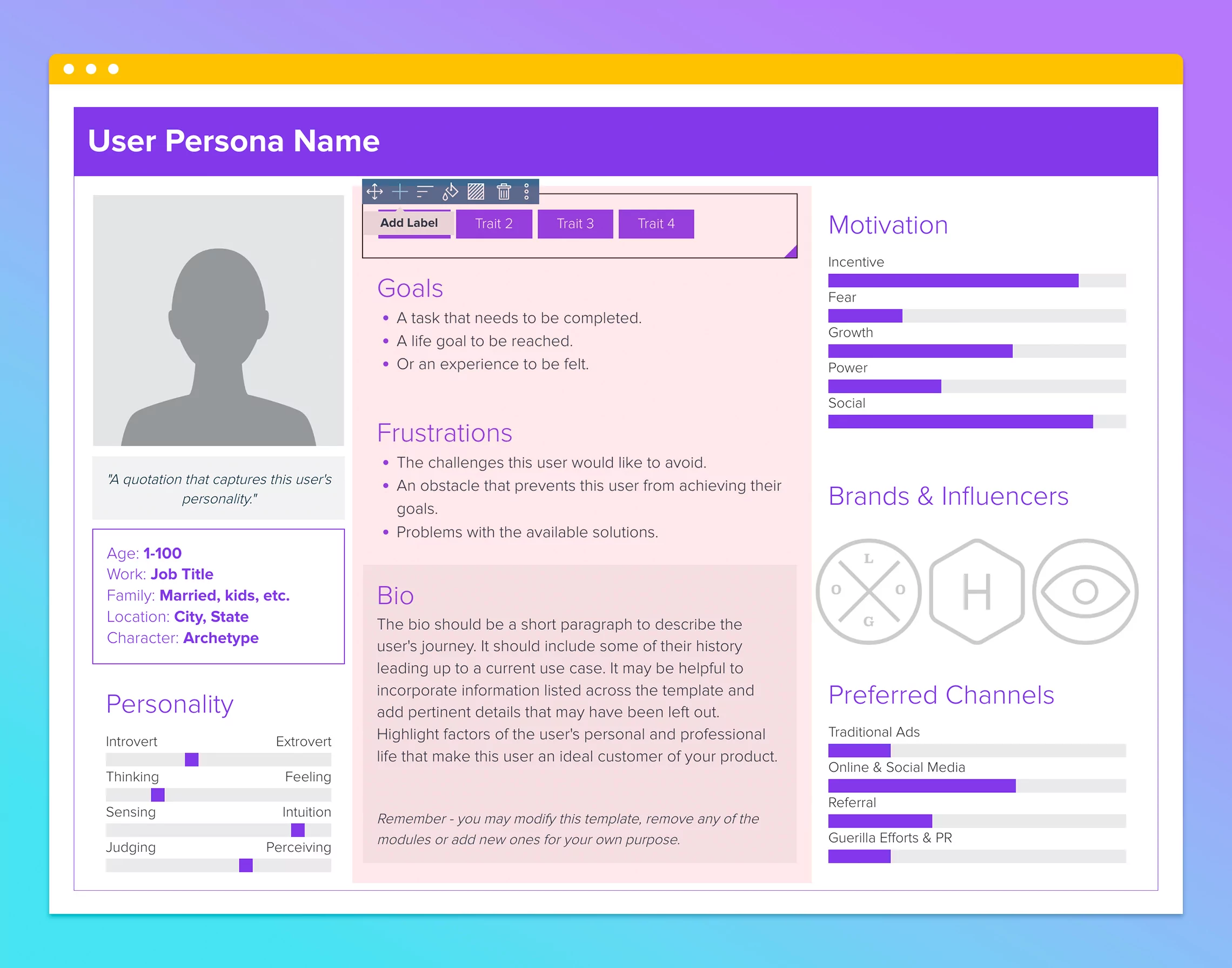
Describe the Persona in a few words based on their personality, work ethic, motivations, and priorities. This should reflect upon your brand’s personality traits. Are they energetic, outgoing self-starters? Or are they driven but disorganized introverts? Choose adjectives that help define how this Persona’s personality differs from other users or potential consumers.
Goals
A good buyer persona example should include what customers are looking for in a product. Do they want something that is easy to use? A device or service that achieves a specific goal? (These questions are critical to product development.). This should be in line with your brand identity and brand personality.
Most Persona goals should be end goals, goals about what the persona ultimately achieves in using your product or service. This could be something tangible: a beautiful advertisement, a sleek web page. An end goal could also be a more intangible achievement from using a product: increased productivity, and greater security. Types of goals to avoid or include on a case-by-case basis:
1. Tasks.
Tasks are items needed to complete in order to accomplish goals.
2. Life goals.
Objectives such as “Retire by age 45,” or “Have a happy marriage” may be too broad and or irrelevant if you were designing a travel app or business card builder. However, there would be a place for these goals on a Persona created for a financial planning company or online couples’ therapy service.
3. Experience goals.
Describe how user personas want to feel when using a product, for example, having fun and feeling relaxed. Not every persona needs experience goals, but in some cases, they are useful to include. Perhaps a Persona struggles using Social Media and wants to feel confident when making online profile decisions. Or a persona using an online banking site, for example, might want to feel reassured that his transactions are secure. When creating user personas, UX (user experience) is a major consideration.
Bonus: Try diagramming a Customer Journey Map to analyze goals, frustrations, actions, and emotions of your user persona. We created templates for different types of customer journeys which can help you get started.
Frustrations
What is preventing your persona from achieving his or her goals? Which concerns does he/she have? What are his frustrations with the current solutions already available? This section is key when it comes to honing the features and services of your product. When you mark the friction and pain points in their lives (backed with real data), it helps identify business opportunities.
Bio
The bio should be a short paragraph describing the user journey. It should include some of their history leading up to a current use case. It may be helpful to incorporate information listed across the template and add pertinent details that may have been left out. Highlight factors of the user’s personal and professional life that make this user an ideal customer of your product.
How To Create a User Persona: The Connection
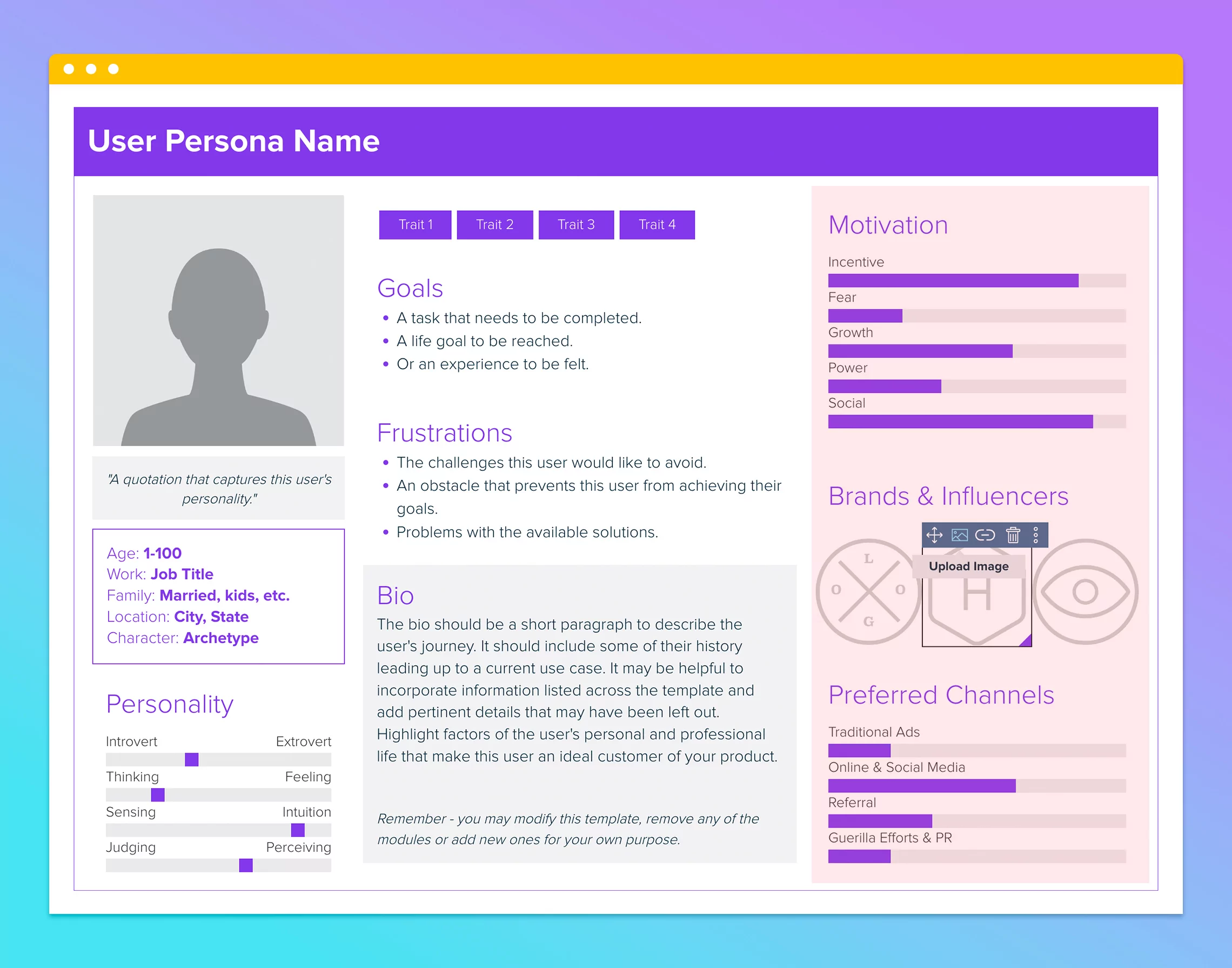
Motivations – What inspires your persona to take action?
Is he/she motivated more by fear or growth? Achievement or power? Use the slider module to shift the ‘virtual percentages’ for each category. This helps understand the pain points of target users.
Brands – What are your users’ favorite or most used brands?
Display their logos in this section. Some of these featured brands may turn into, or already be, your competitors! You can find brand images at Brands of the World to upload into the persona. If you’re looking to fit more brands on the page, you can list the company names rather than display their images.
Preferred Channels – How are you going to reach your target audience?
You might not find your grandma on Twitter and you’re sure as not going to find your 12-year-old nephew reading the Wall Street Journal. If your audience is a tech-savvy college student, the best way to reach them might be online & social media. A teenager might be better reached through television ads through traditional media. From your user research, you should have a good picture of what sort of channel your audience is primarily using or can be found on. We picked four broad categories:
Traditional Ads:
Television, radio, print, billboards, etc.
Online & Social Media:
Banner ads, streaming video/audio ads, Facebook, LinkedIn, etc.
Referral:
Recommendations from friends and family, online reviews, influencer blogs, etc.
Guerrilla Efforts & PR:
Events, experiential marketing, out-of-home advertising, etc.
Bonus: Content Marketing, as a broader category, can touch either one of these channels. See our comprehensive stack of tools and templates to develop your content marketing from strategy to planning, from publishing and reporting.
As you can see these are very broad categories — you could even list all the options if they’re relevant to your consumer. Or you could use ecosystem mapping to define where you can reach different customer segments.
Any section label can be altered to better specify your user personas. If your product’s use is linked to users’ education, remove ‘archetype’ and rename it ‘education.’ Xtensio has seen consumers revise upwards of 4 titles or remove the labels entirely. You can also change the accent colors of your persona. Choose from Xtensio’s 8 colors or enter your own personal ‘Hex#’ to have the persona better fit your company/product color scheme. Done!
What comes next?
Use a customer journey map to explore how users might interact with your product, services, or organization. With user research, you should create a persona for each segment of target users. You can also create a fact sheet or a one-pager directed at specific segments of your user base.
Implementation Tips
When using personas, integrate them into your workflow to ensure they have a real impact. Start by sharing them with your team and making them a central part of your discussions. Refer to your personas during meetings, design sessions, and when making strategic decisions. This keeps everyone’s focus on the user and aligns your efforts.
Additionally, use personas to test your designs and marketing strategies. Ask yourself how each persona would react to your ideas and if their needs are being met. This approach helps you create more user-centered products and campaigns. Lastly, regularly revisit and update your personas to keep them relevant as your audience evolves.
By following these steps and tips, you’ll create user personas that genuinely connect with your audience, making your projects more meaningful and effective.
QUICK TIP: Use the “How To Make A One Pager (With Template and Examples)” guide to create your brand’s one-pager.
Written by

List of free sources used in this article
- User Persona Template and Examples
- User Personas: Necessary or not?
- Summary of Rogers’ Innovation Adoption Curve. Abstract
- The 12 Common Archetypes By Carl Golden
- Official Myers Briggs Test & Personality Assessment
- Free Personality Test by 16Personalities
- My MBTI® Personality Type Basics
- Brands of the World™

Teamspace for smart, beautiful deliverables.



375,214 users and counting…
