
How To Develop a SaaS Pricing Model (With Template)
Updated by Xtensio
A pricing strategy is a framework or model used to establish the best price point for a product or service. This exercise will help you choose prices to maximize profits and shareholder value while considering your target customer, features, benefits, and market demand. Use this step-by-step guide to create and iterate on your SaaS pricing model, easily. Explore this template.
Xtensio is your team space for beautiful living documents.
Create, manage and share business collateral, easily.
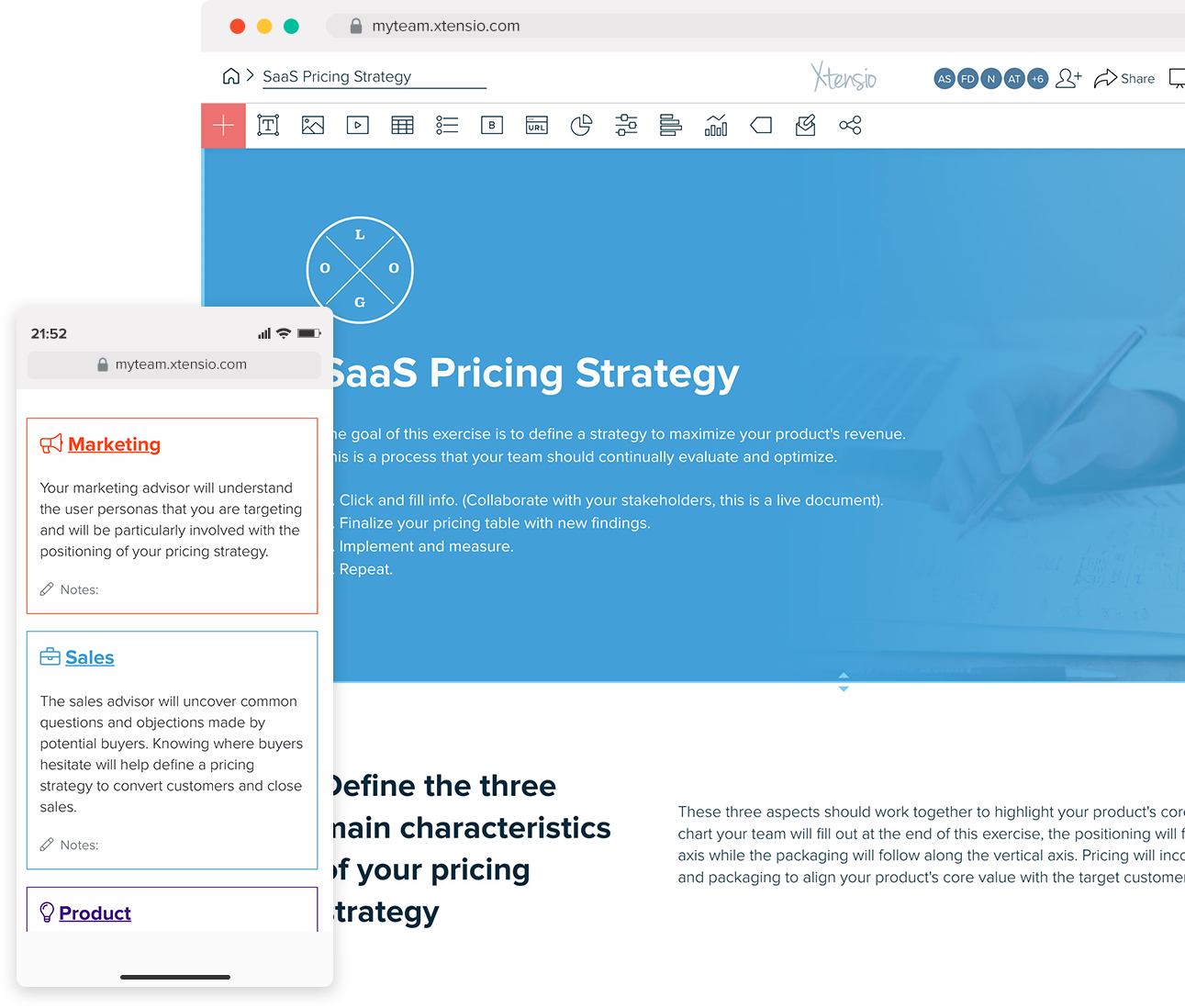
Table of Contents
Everything you need to develop a successful SaaS pricing model
Most SaaS companies begin by creating a product that meets an identified goal that you or others have encountered. Eventually, the product needs to bring in revenue in order to make your SaaS company a successful and sustainable business. While customer acquisition is a large part of growth, pricing is a crucial part of your business that has the highest impact on growth. The pricing strategy exercise helps you:
- Define a pricing strategy that maximizes your product’s revenue.
- Understand how to set the right prices for your audience and revenue goals.
- Incorporate both positioning and packaging to align your product’s core value with the target customer’s willingness to pay.
With Xtensio, you can easily create your pricing model tailored to your product and growth goals. Loop in colleagues, investors and key stakeholders to create and iterate on your pricing model. You can work hand-in-hand with colleagues on a live doc, leave feedback, and share a link so everyone is in-the-know about your pricing strategy.
Define the three main characteristics of your SaaS Pricing Model
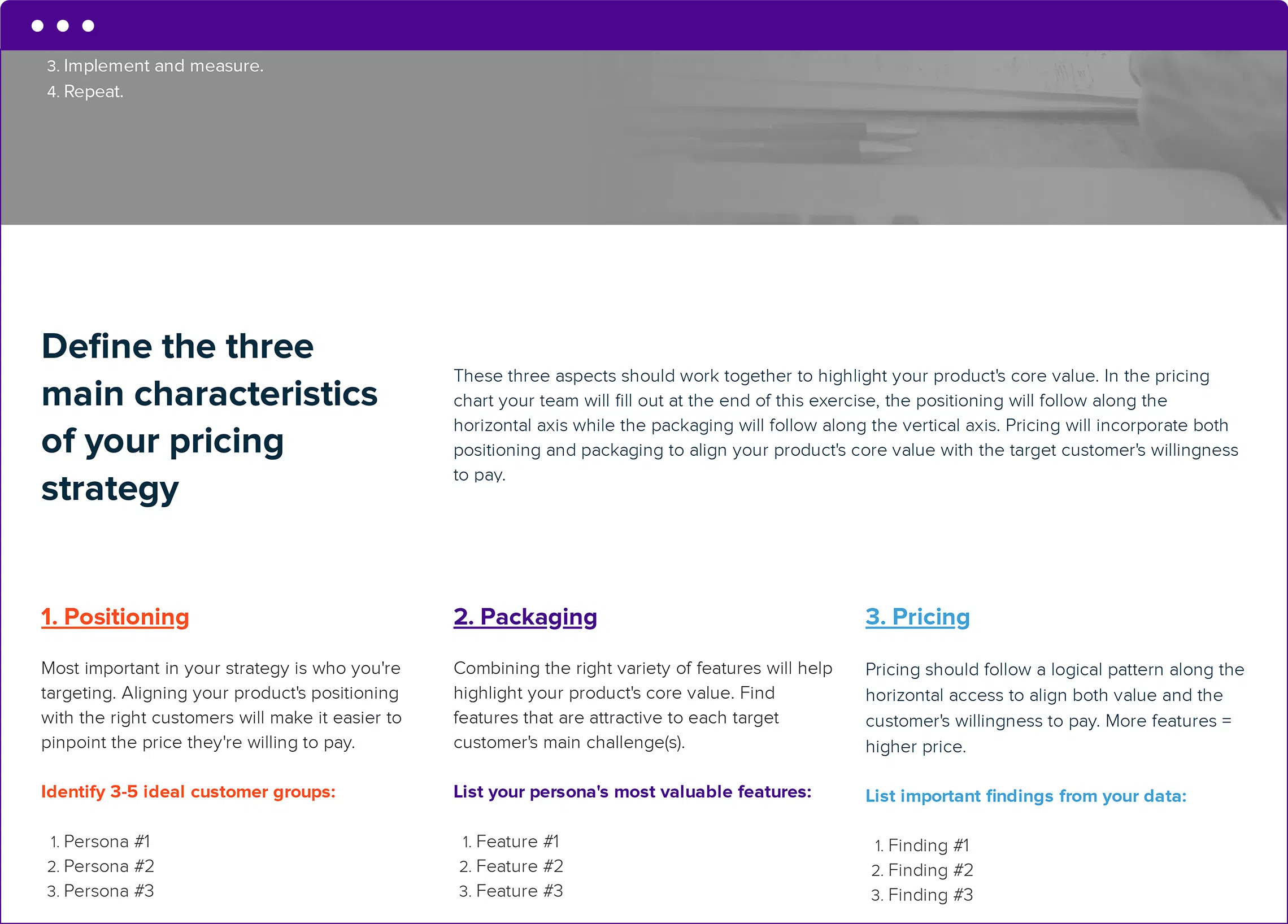
These three aspects should work together to highlight your product’s core value. In the pricing chart your team will fill out at the end of this exercise, the positioning will follow along the horizontal axis while the packaging will follow along the vertical axis. Pricing will incorporate both positioning and packaging to align your product’s core value with the target customer’s willingness to pay.
Positioning: Most important in your strategy is who you’re targeting. Aligning your product’s positioning with the right customers will make it easier to pinpoint the price they’re willing to pay. Use the persona template to identify 3-5 ideal customer groups.
Packaging: Combining the right variety of features will help highlight your product’s core value. Find features that are attractive to each target customer’s main challenge(s). List the most valuable features for your core customer groups.
Pricing: Pricing should follow a logical pattern along the horizontal access to align both value and the customer’s willingness to pay. More features = higher price. List key findings from your positioning and packaging research.
We’ll dive deeper into each of these three aspects below.
Get input and feedback from your “Pricing Advisory Board”
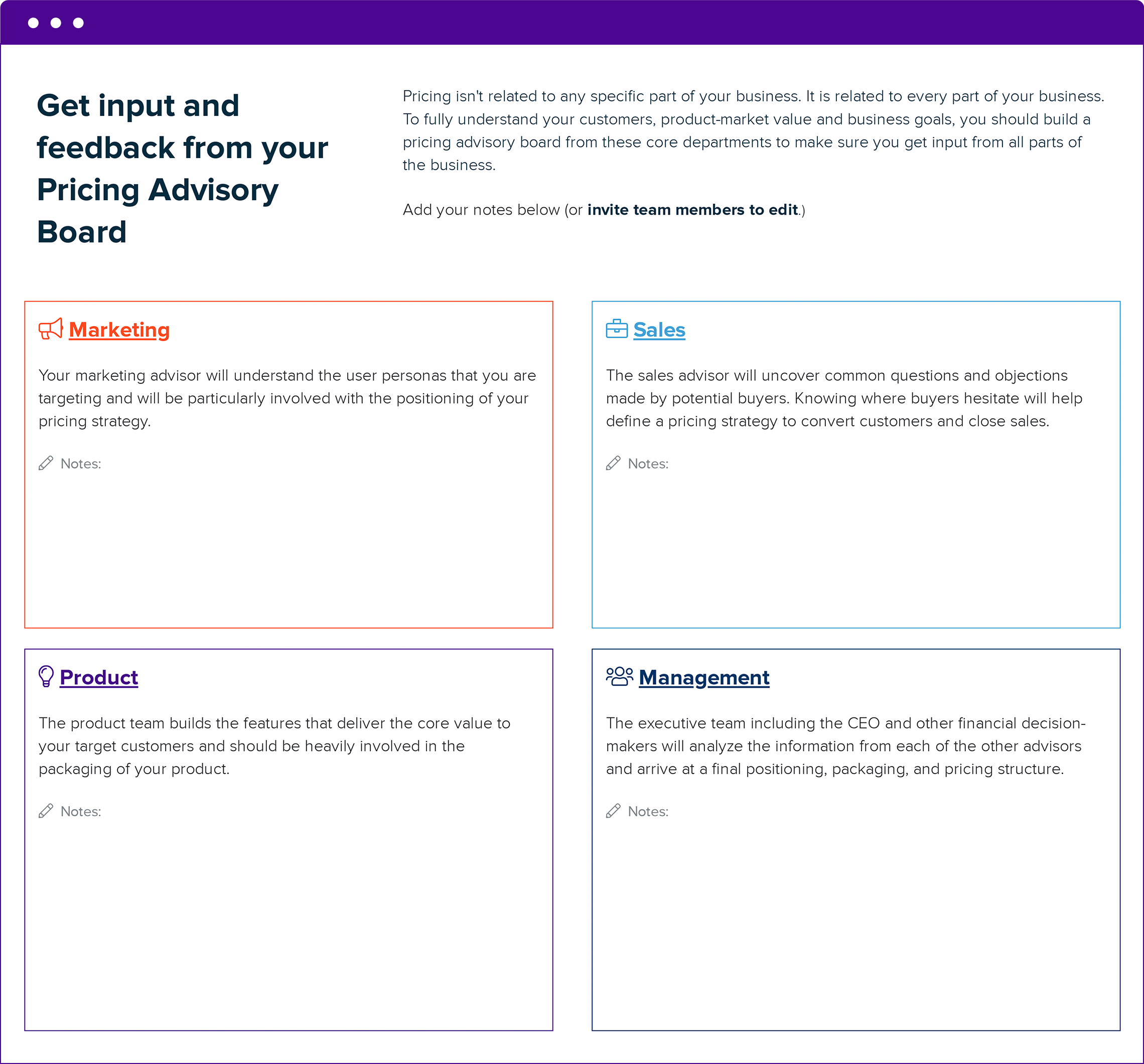
Pricing isn’t related to any specific part of your business. It is related to every part of your business. To fully understand your customers, product-market value and business goals, you should build a pricing advisory board from these core departments to make sure you get input from all parts of the business.
Marketing: Your marketing advisor will understand the user personas that you are targeting and will be particularly involved with the positioning of your pricing strategy.
Sales: The sales advisor will uncover common questions and objections made by potential buyers. Knowing where buyers hesitate will help define a pricing strategy to convert customers and close sales.
Product: The product team builds the features that deliver the core value to your target customers and should be heavily involved in the packaging of your product.
Management: The executive team, from the CEO down, will be the final decision-makers. They will analyze the information from each of the other advisors to arrive a final positioning, packaging and pricing structure.
Add your notes and invite key stakeholders from different departments to edit your pricing strategy document.
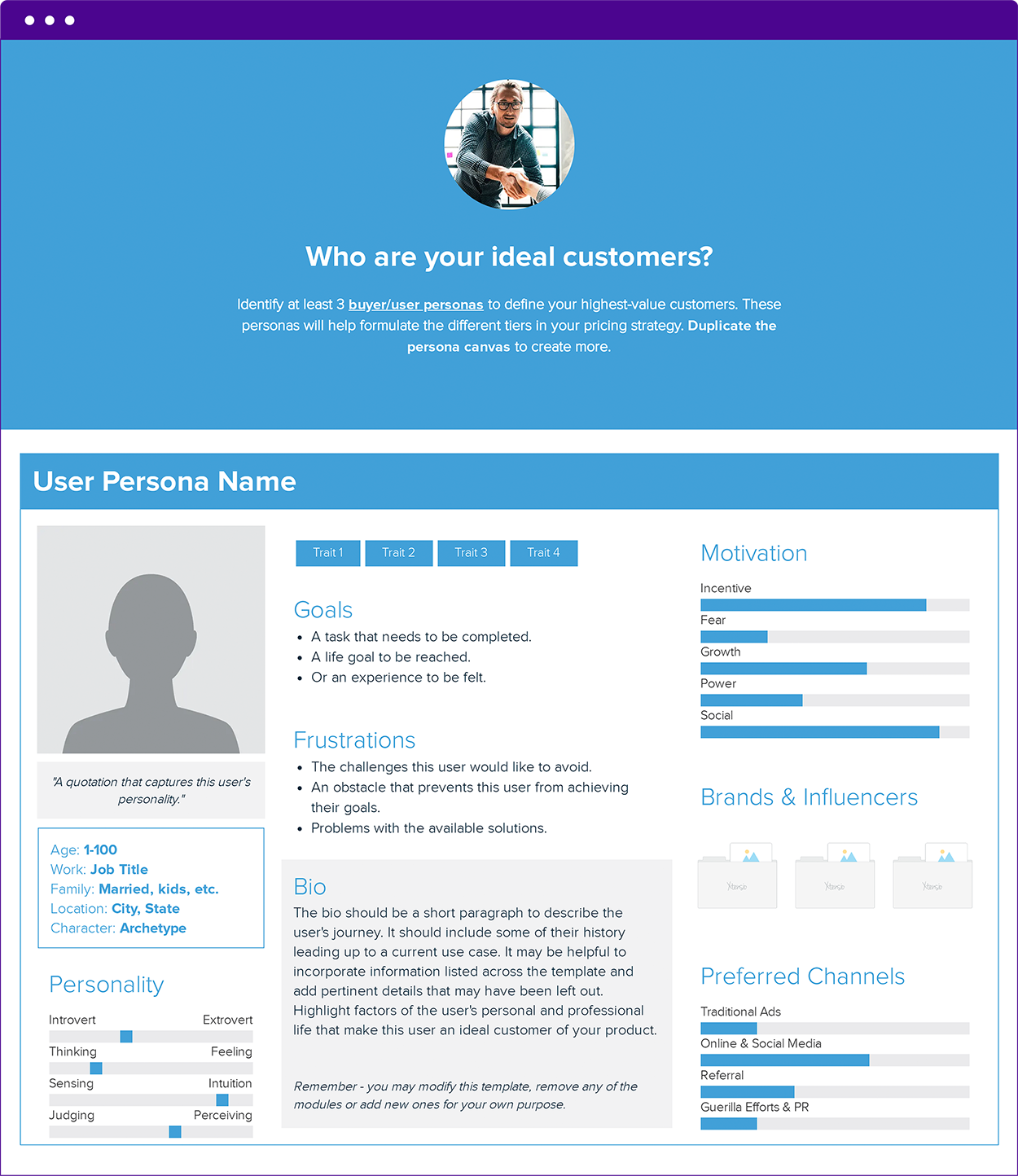
Identify 3 user personas to define your highest value customers
Before you jump into the user persona template, talk to consumers. Send emails, hop on calls, run surveys and questionnaires. Record and synthesize information. Then you can display what you’ve learned by filling out the user persona template. Yes, this will take effort; it will take digging. But this work is necessary – user personas, when authentically completed, become go-to documents to ensure every business, design and marketing decision resonates with target consumers. Your personas will help formulate the different tiers in your pricing strategy.

Quick Tip: Duplicate the persona canvas to identify additional customer groups.
Define your “Key-Value Metric”
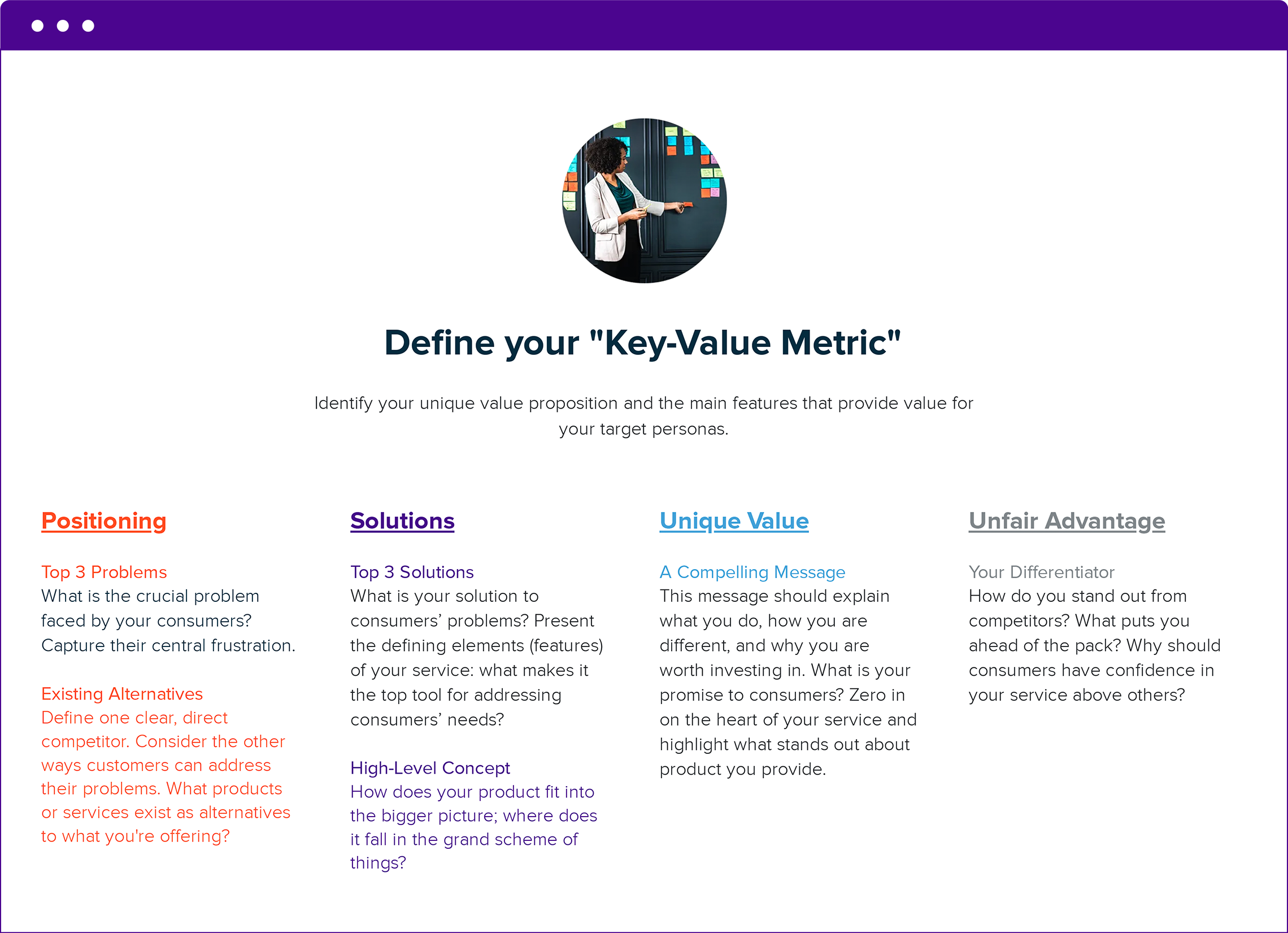
Identify your unique value proposition and the main features that provide value for your target personas.
Outline the Problem: What is the crucial problem faced by your consumers? Capture their central frustration. Define one clear, direct competitor. Consider the other ways customers can address their problems. What products or services exist as alternatives to what you’re offering?
Explain your Solution: What is your solution to consumers’ problems? Present the defining elements (features) of your service: what makes it the top tool for addressing consumers’ needs? How does your product fit into the bigger picture; where does it fall in the grand scheme of things?
Uncover your unique value prop: This message should explain what you do, how you are different, and why you are worth investing in. What is your promise to consumers? Zero in on the heart of your service and highlight what stands out about product you provide.
Identify your unfair advantage: How do you stand out from competitors? What puts you ahead of the pack? Why should consumers have confidence in your service above others?
Explore “Customer – Pricing Fit”
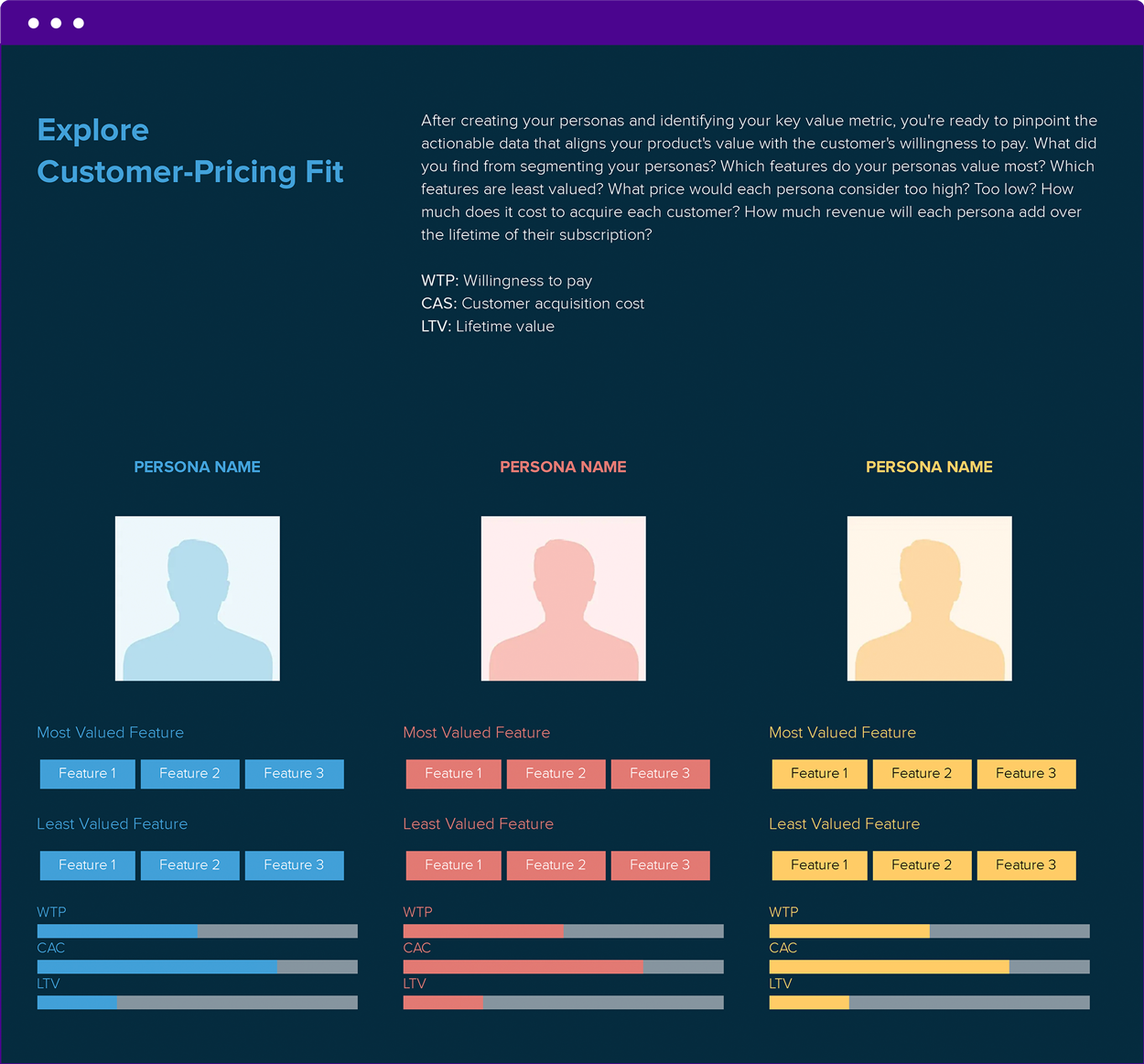
After creating your personas and identifying your key value metric, you’re ready to pinpoint the actionable data that aligns your product’s value with the customer’s willingness to pay. What did you find from segmenting your personas? Which features do your personas value most? Which features are least valued? What price would each persona consider too high? Too low? How much does it cost to acquire each customer? How much revenue will each persona add over the lifetime of their subscription?
WTP: Willingness to pay
CAS: Customer acquisition cost
LTV: Lifetime value
Quick Tip: Use charts and graphs to visualize your WTP, CAS and LTV for each customer group.
Translate your research into your Saas pricing model
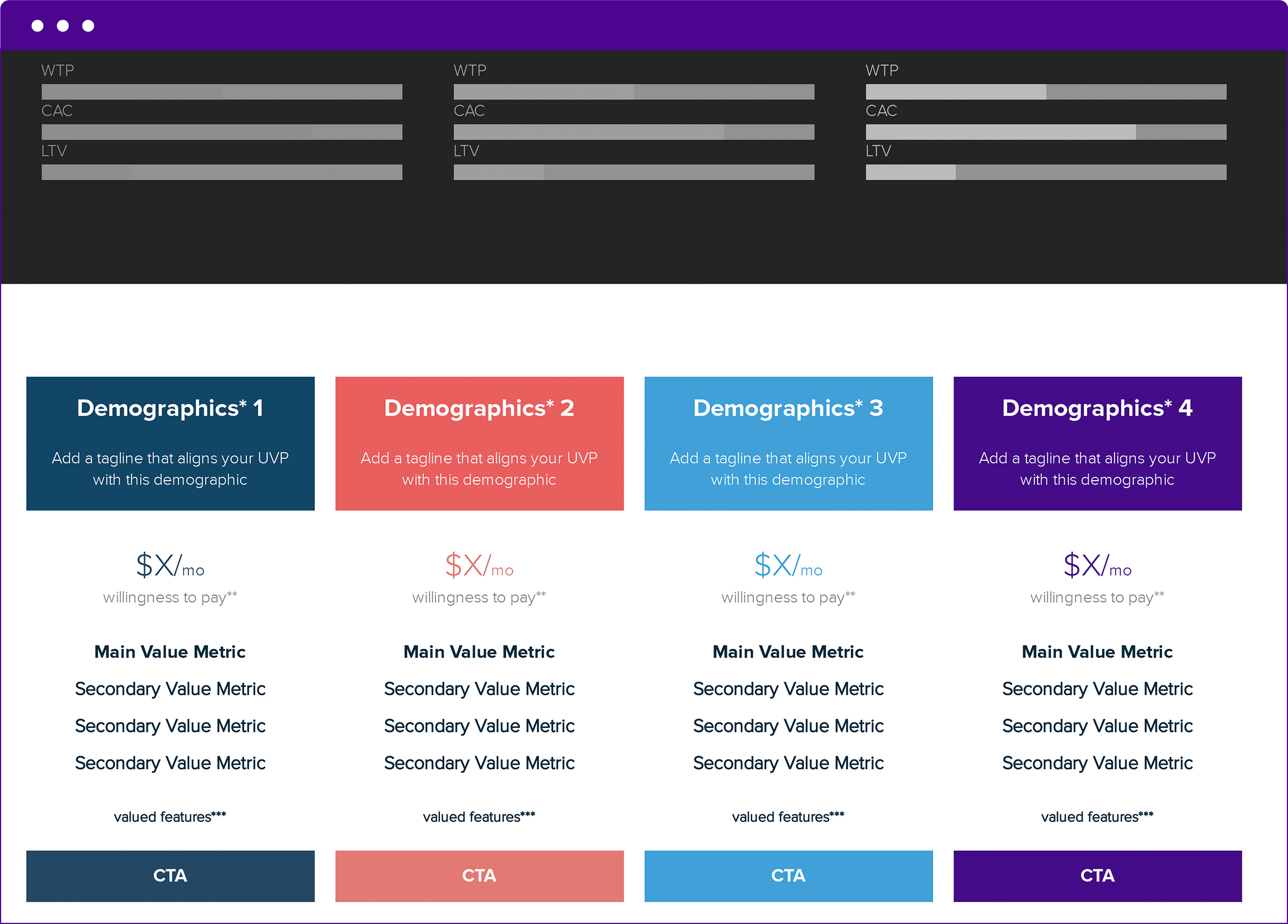
Create pricing tiers for each of your major customer groups and package your features based on willingness-to-pay and the value these features will provide to each customer segment.
- Package names should align with each customer group. The demographics should summarize each persona into a single word that best describes that customer: a freelancer, a small business, a growing company, or a large enterprise.
- The price of packages should reflect each demographic’s willingness to pay, which increases with the larger demographics and value metrics.
- Your feature list should be packaged according to the preferences of each demographic. The freelancer persona only needs quick and easy access to the product, while an enterprise client may need more customized features and priority support.
Share your pricing strategy as a link, monitor, evaluate & iterate
When you’ve finished creating your SaaS pricing strategy with Xtensio’s editor, you can send the live link to share it as a responsive webpage (and add password protection), export a PDF or present it as a slideshow in a meeting. The SaaS pricing strategy exercise template is adaptable just like other Xtensio tools, it can and should be repurposed, revisited, and revised regularly.
Create pricing tiers for each of your major customer groups and package your features based on willingness-to-pay and the value these features will provide to each customer segment.
Written by


Teamspace for smart, beautiful deliverables.







375,214 users and counting…
